Research · 2026
Humanoid & Craft
Using three ordinary cameras to capture a person's movement, as motion data for a humanoid robot simulation.
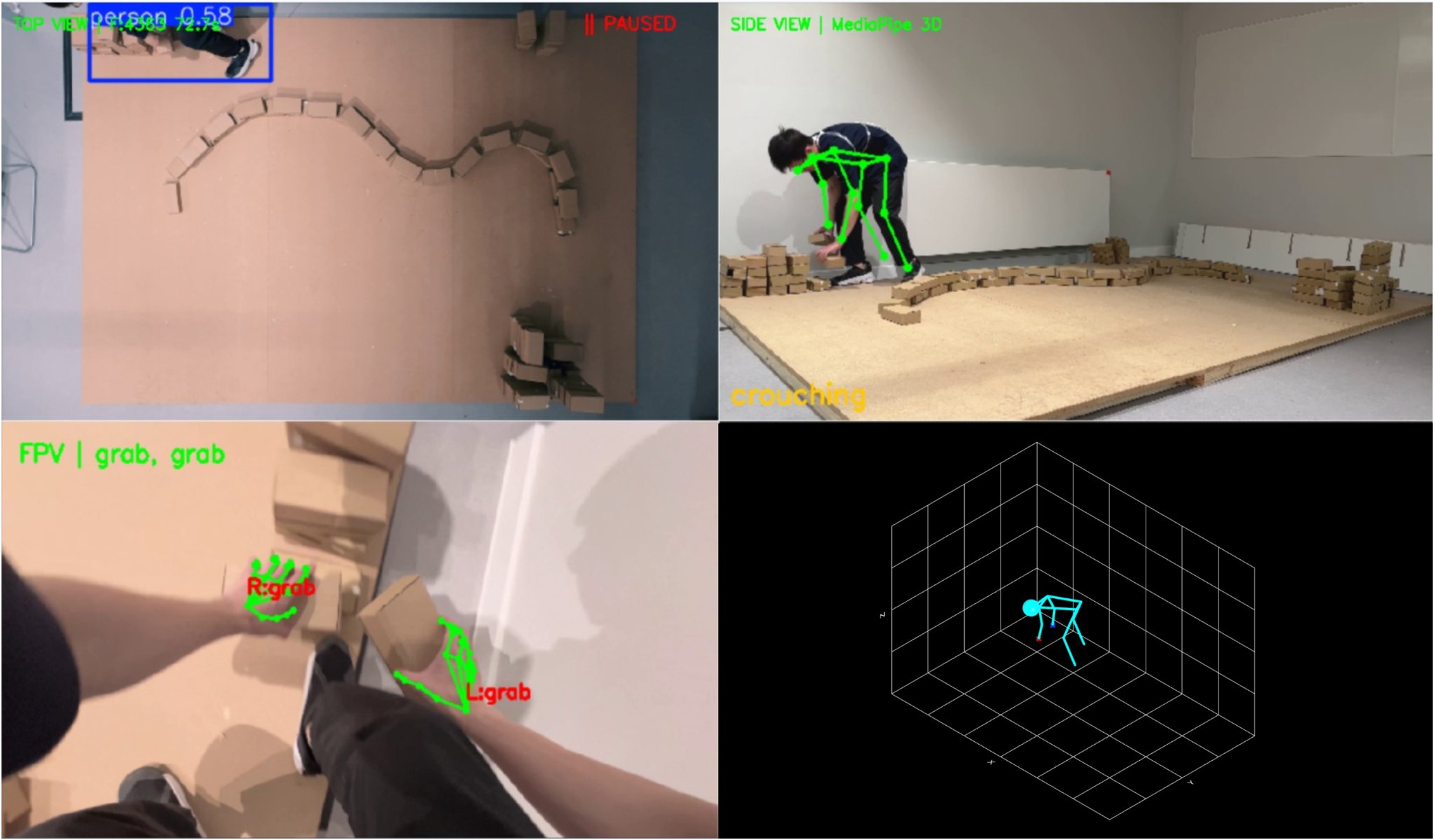
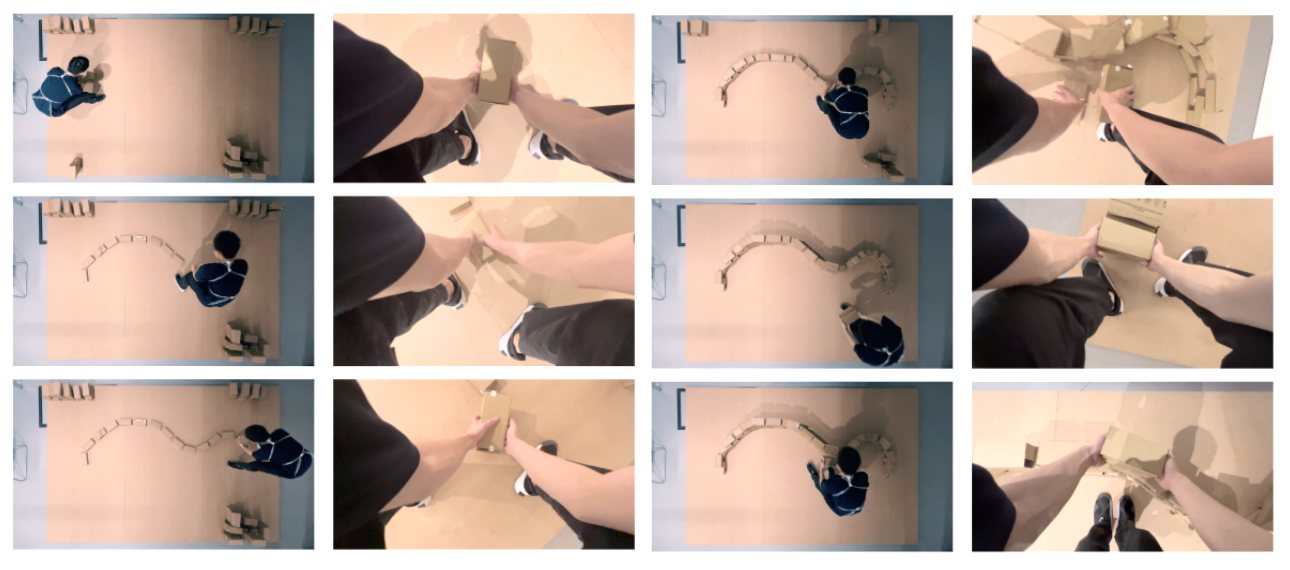
This research uses ordinary video, in place of a motion capture system, to record a person's movement for a humanoid robot simulation. I recorded myself stacking cardboard boxes with three cameras. Each camera has one job. The top camera gives my position, the side camera gives my posture as a skeleton, and the chest camera reads my hands. In Grasshopper, the skeleton is placed at my position, and I checked it in Rhino. My part was this capture pipeline and the motion data. The humanoid simulation was run by our partner in Beijing. A first-author paper on the work is under review.
Humanoid robots are often given human movement as a reference. This research tests how far ordinary video can go in place of a motion capture system.
I recorded myself stacking cardboard boxes into a low wall, with two cameras on tripods and one on my chest. Each camera has one job. The top camera finds where I am on the floor, with YOLO. The side camera gives my posture as a 3D estimate, with MediaPipe Pose. The chest camera reads my hands with MediaPipe Hands and simple rules that label grab, pinch and open. In Grasshopper, the skeleton from the side camera is placed at the floor position from the top camera. I checked the skeleton in Rhino as the videos played.
The method has clear limits. The boxes are cardboard, so this is a study of movement only, not of weight or material. The three videos are aligned by frame number only, with no hardware sync and no camera calibration. So far, the output is a rough reference, not motion capture quality.
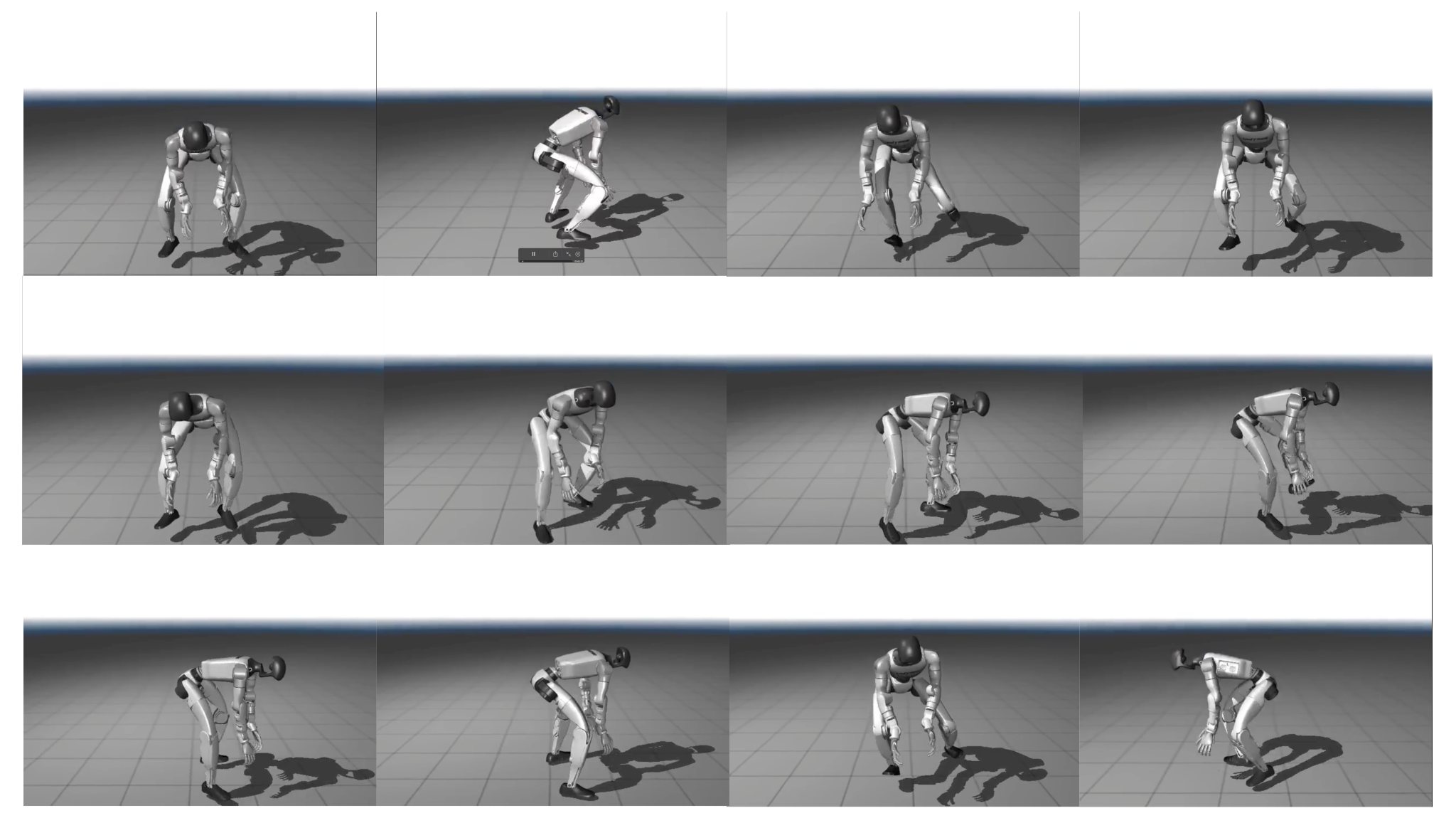
For the humanoid simulation, I exported the motion data with a note of its limits. I also converted it into the eleven target points our partner in Beijing asked for. Our partner ran the simulation and mapped the motion onto a robot model with their own method.
A first-author paper on this work is under review. Co-authors: Yuemin Gong, Jianing Luo, Boyuan Yu, Adam Holloway and Adam Fingrut.
Supplementary