Design · 2026
Euston SecondSelf
A negotiable, demountable timber hub for Euston.
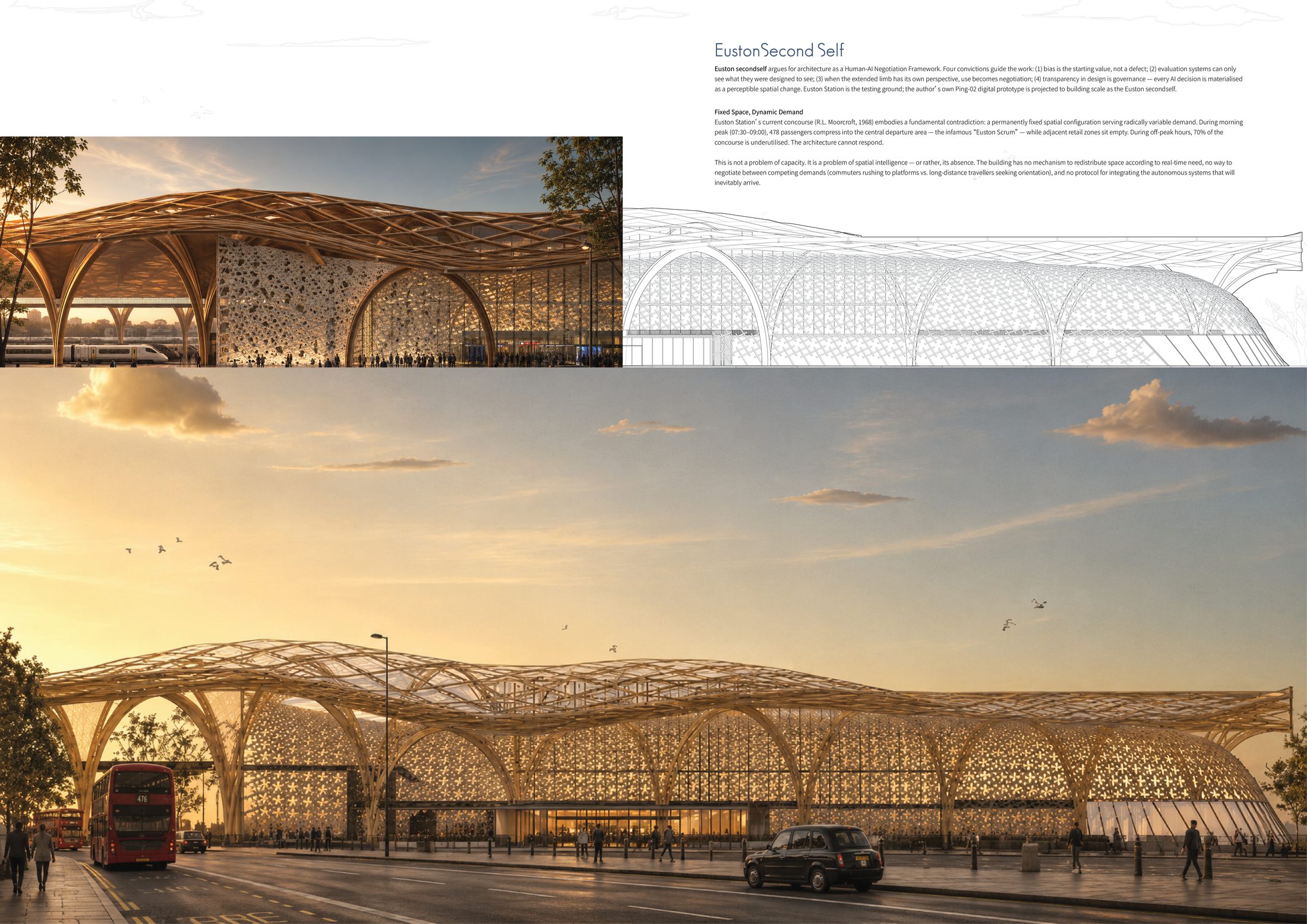
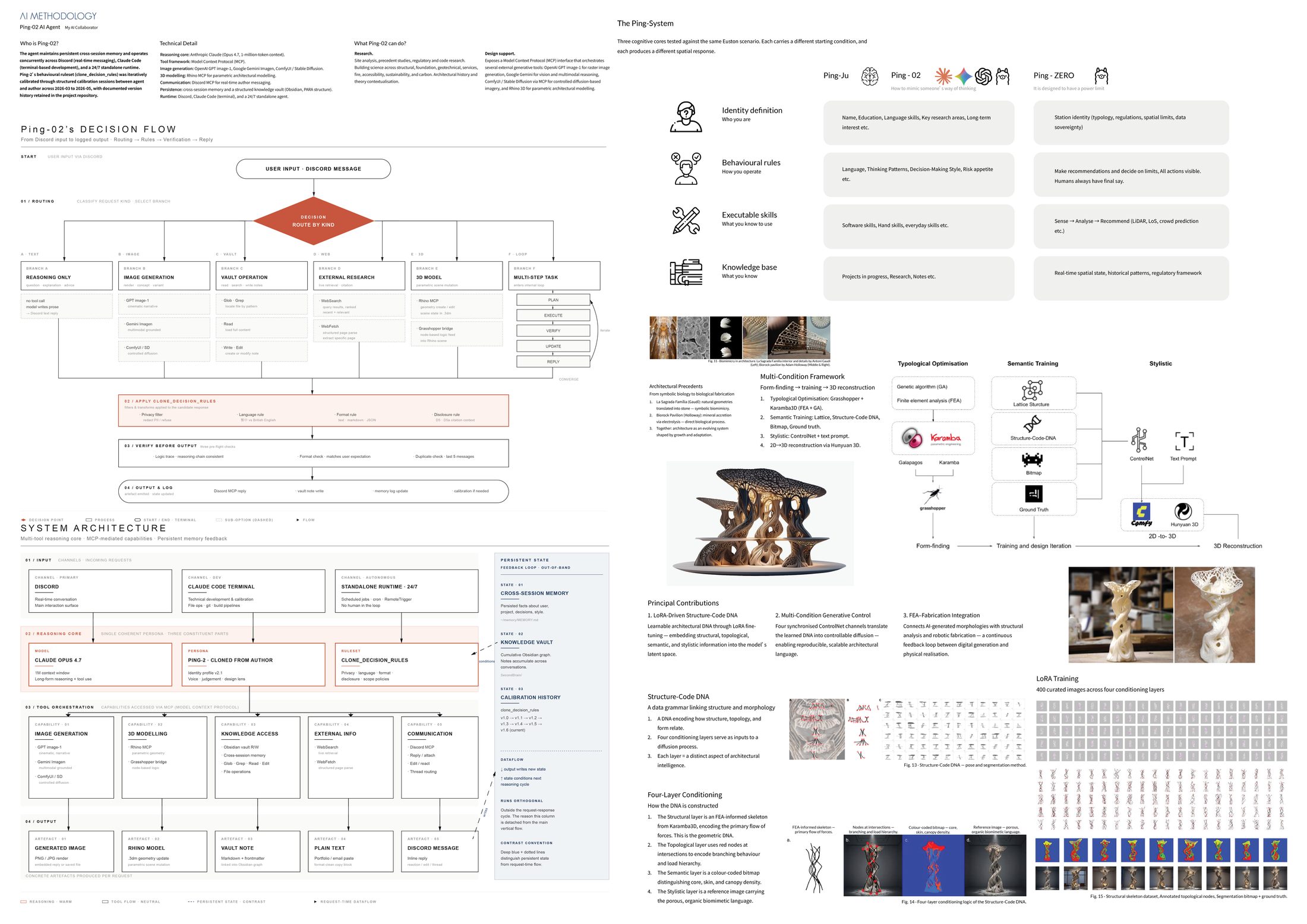
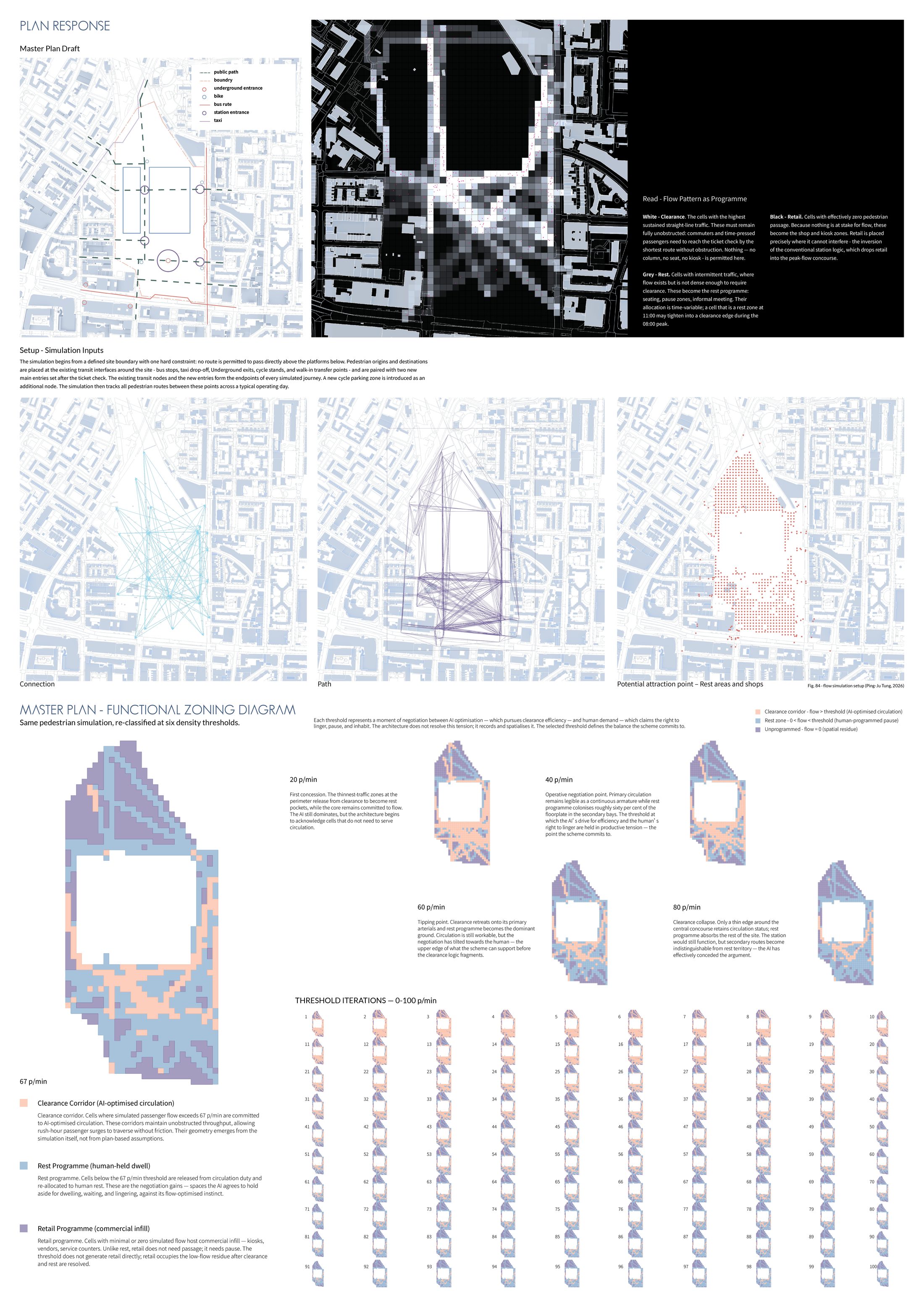
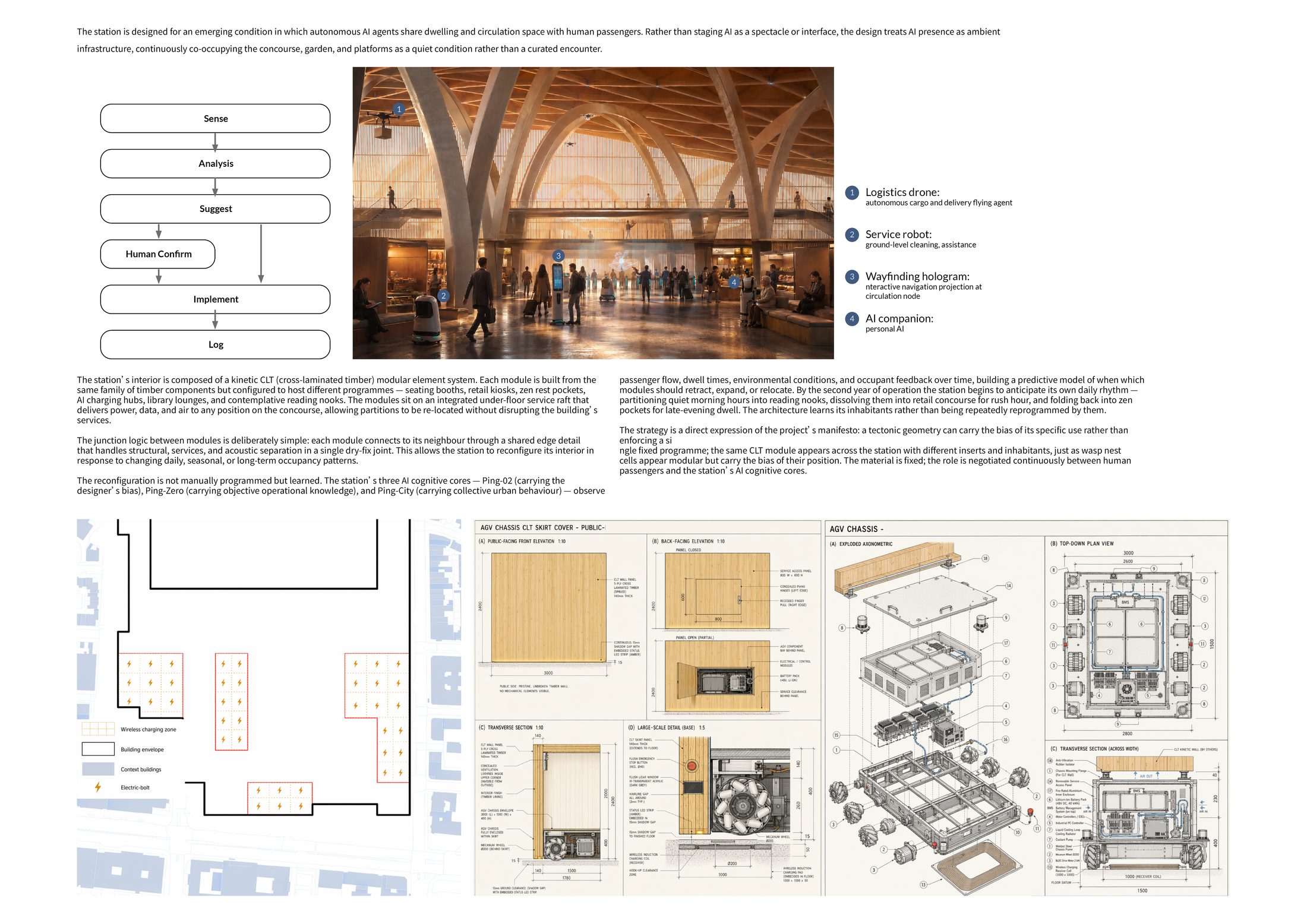
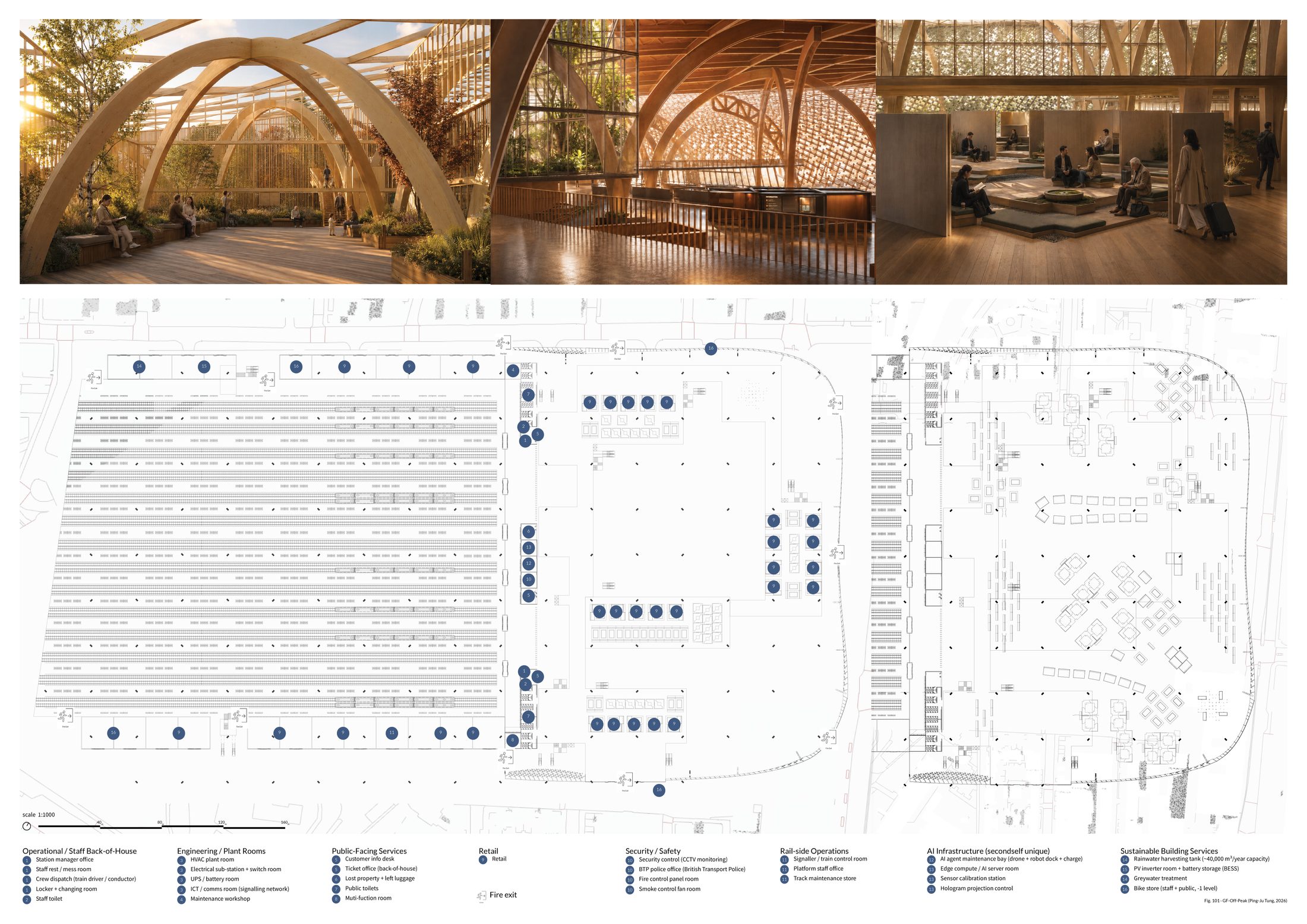
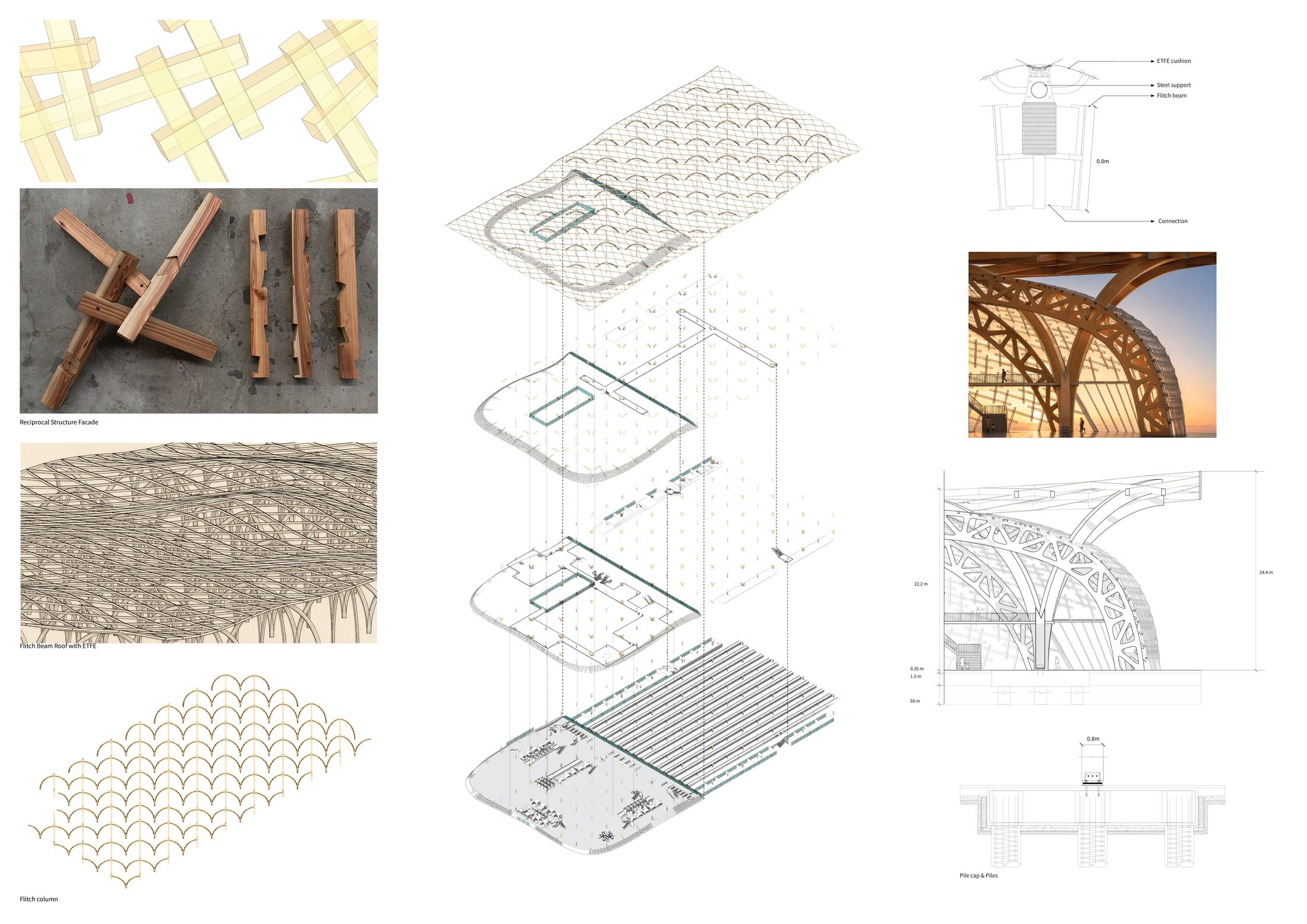
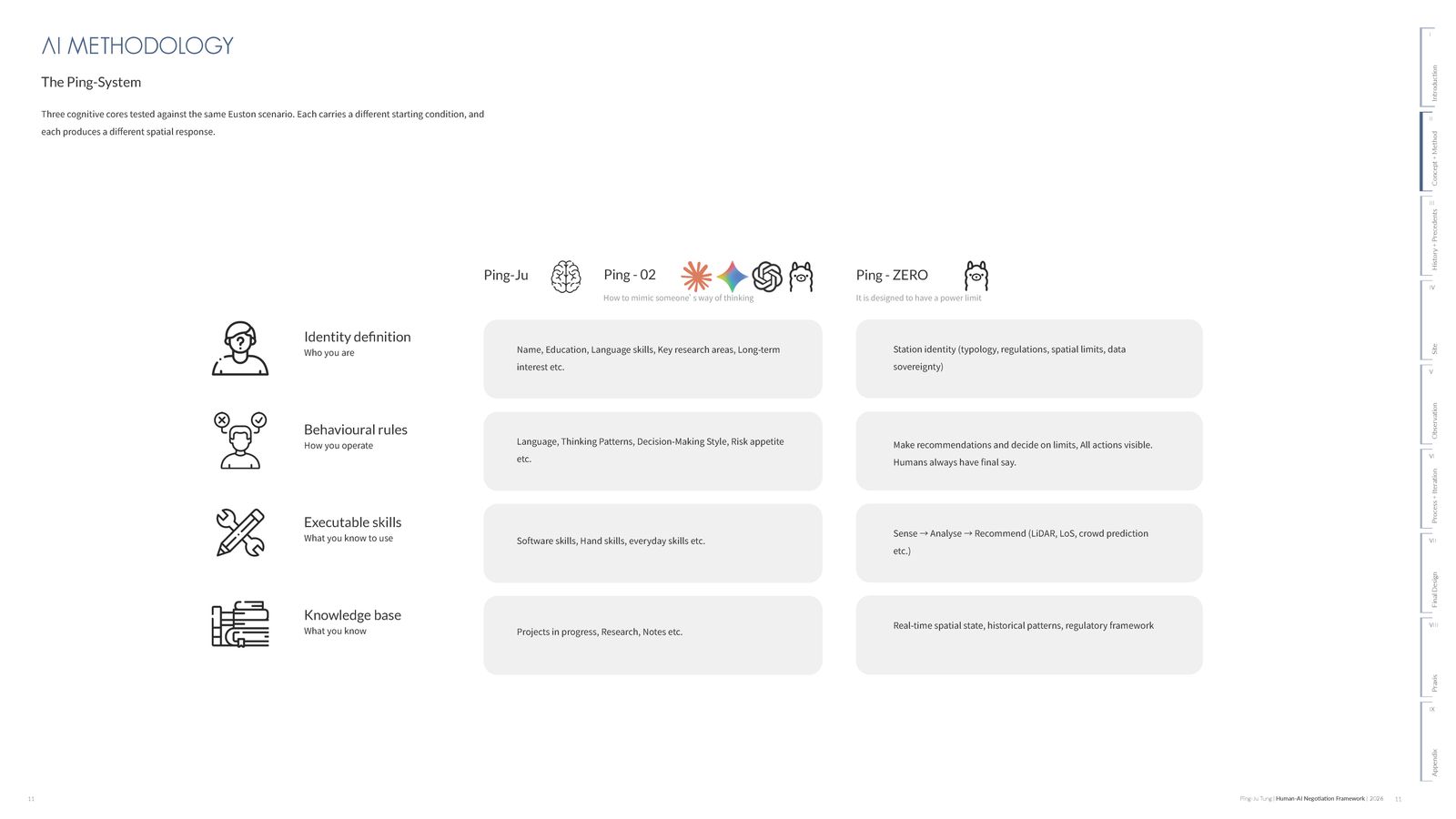
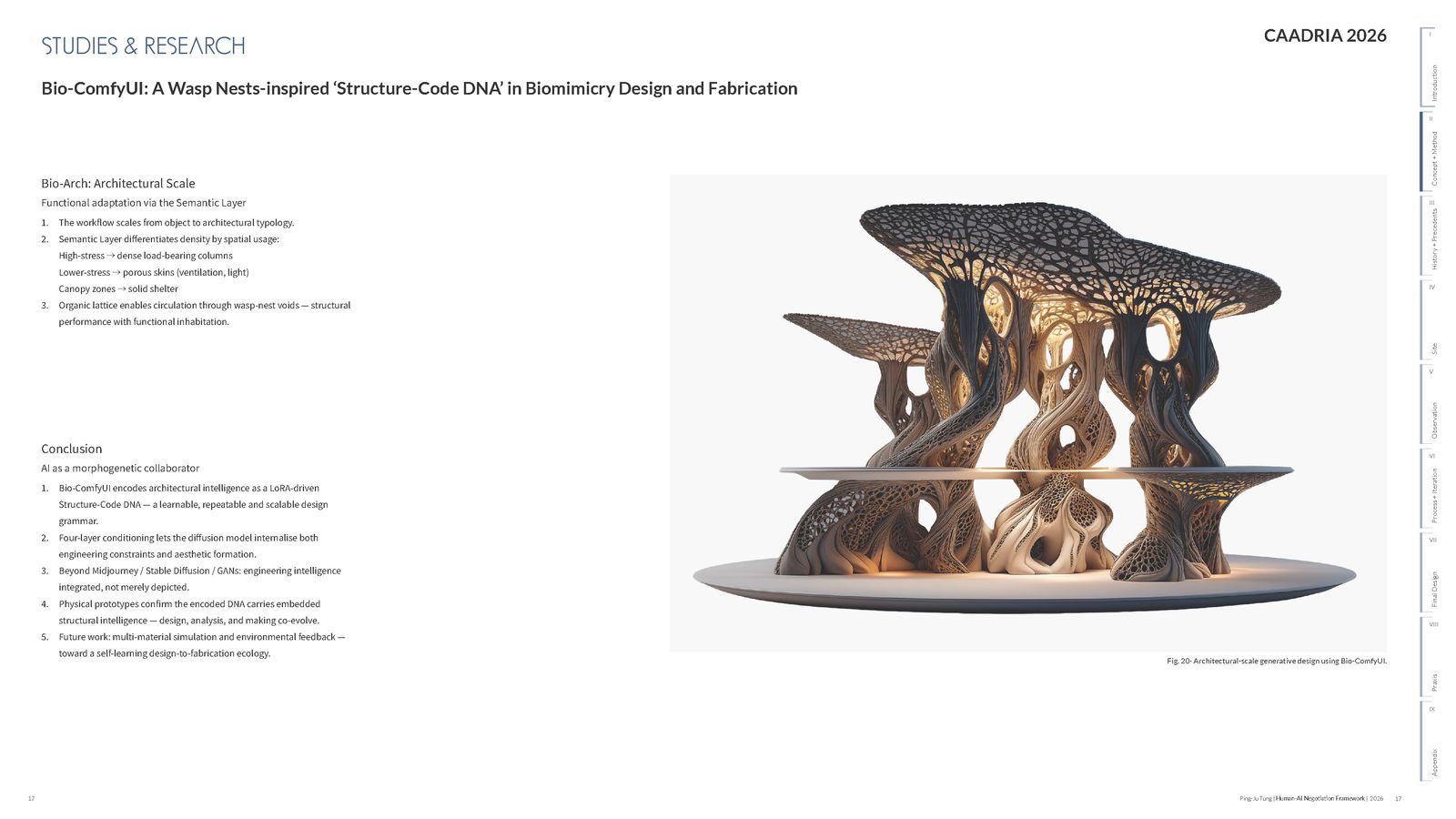
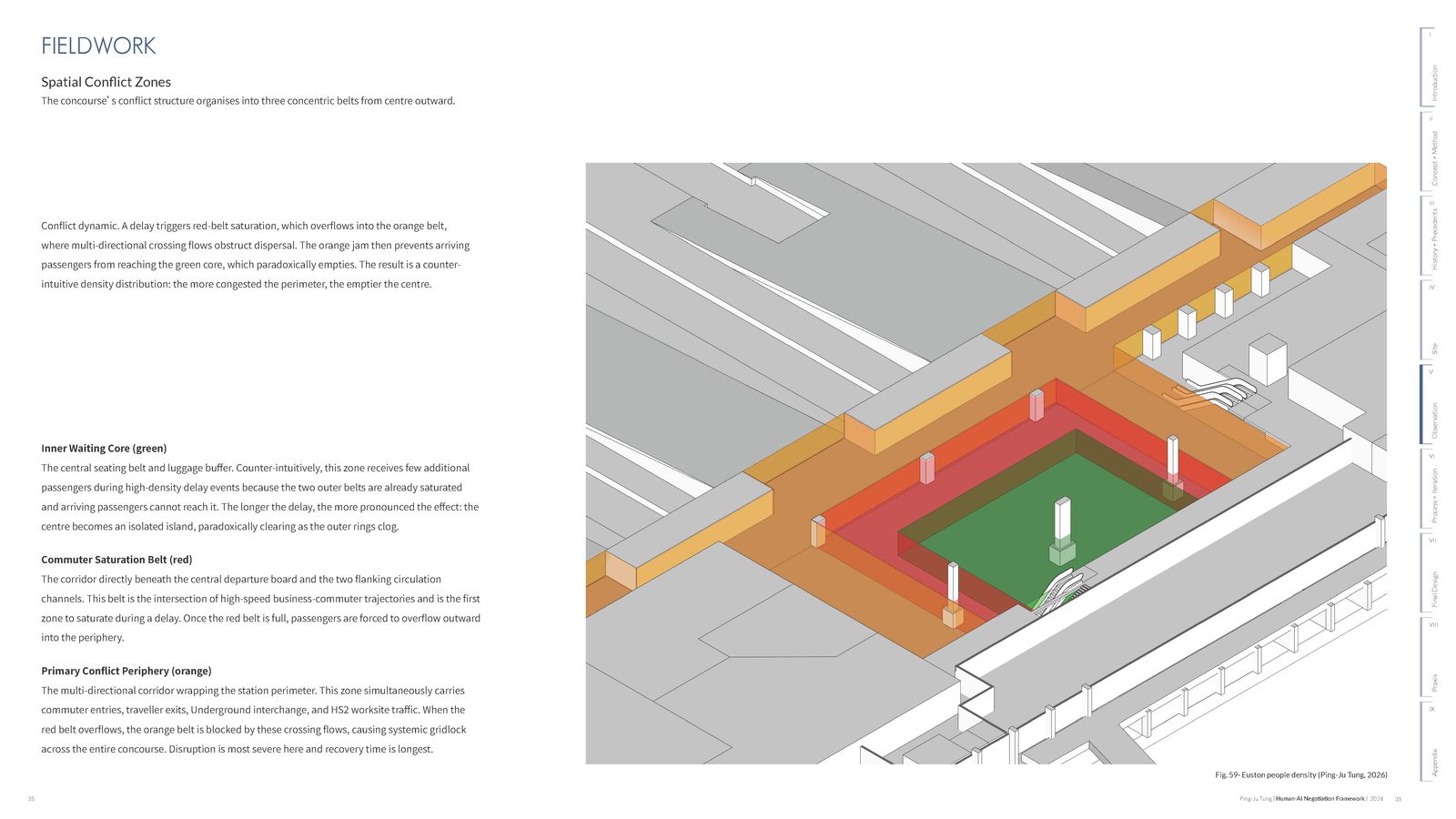
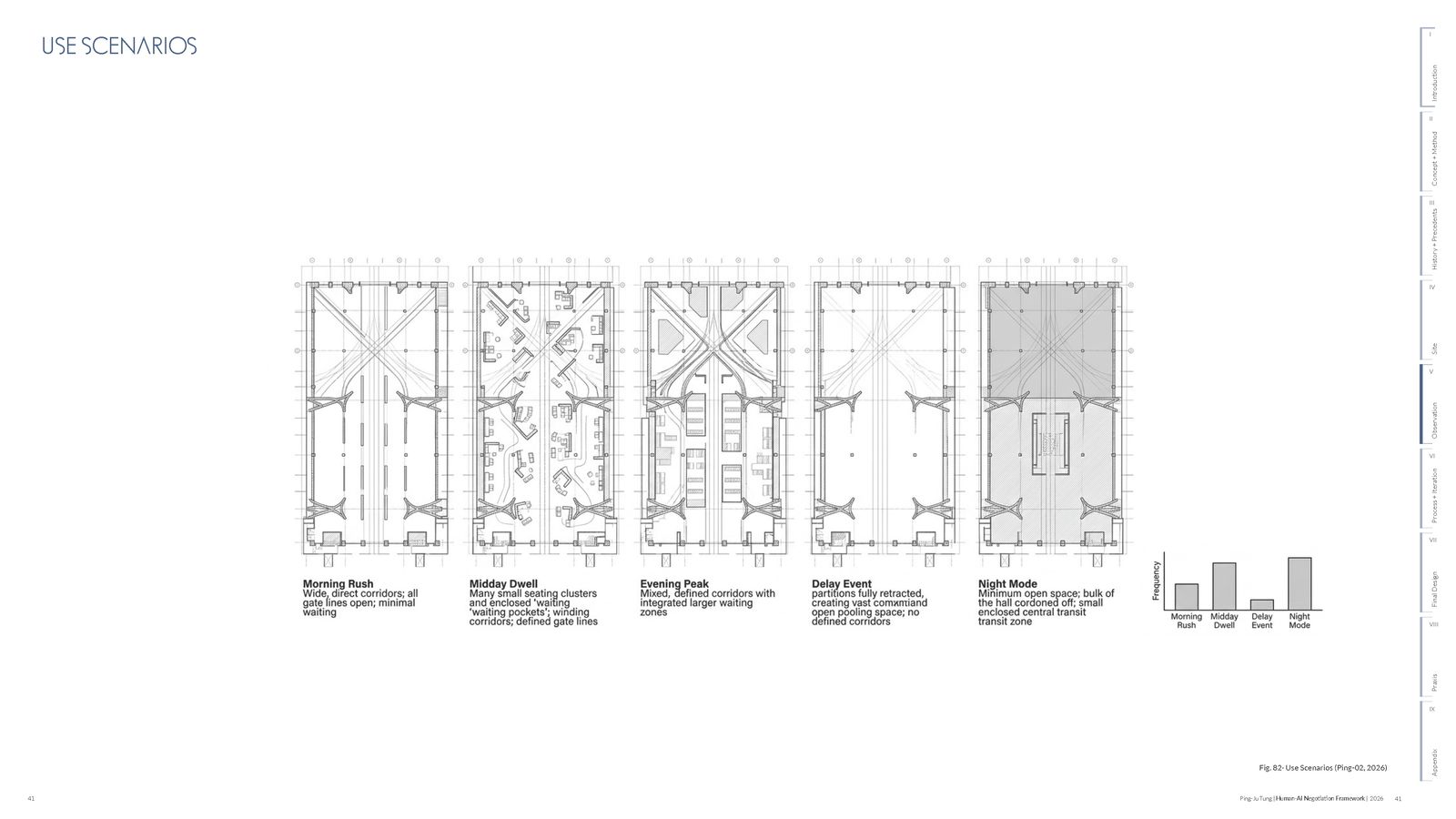
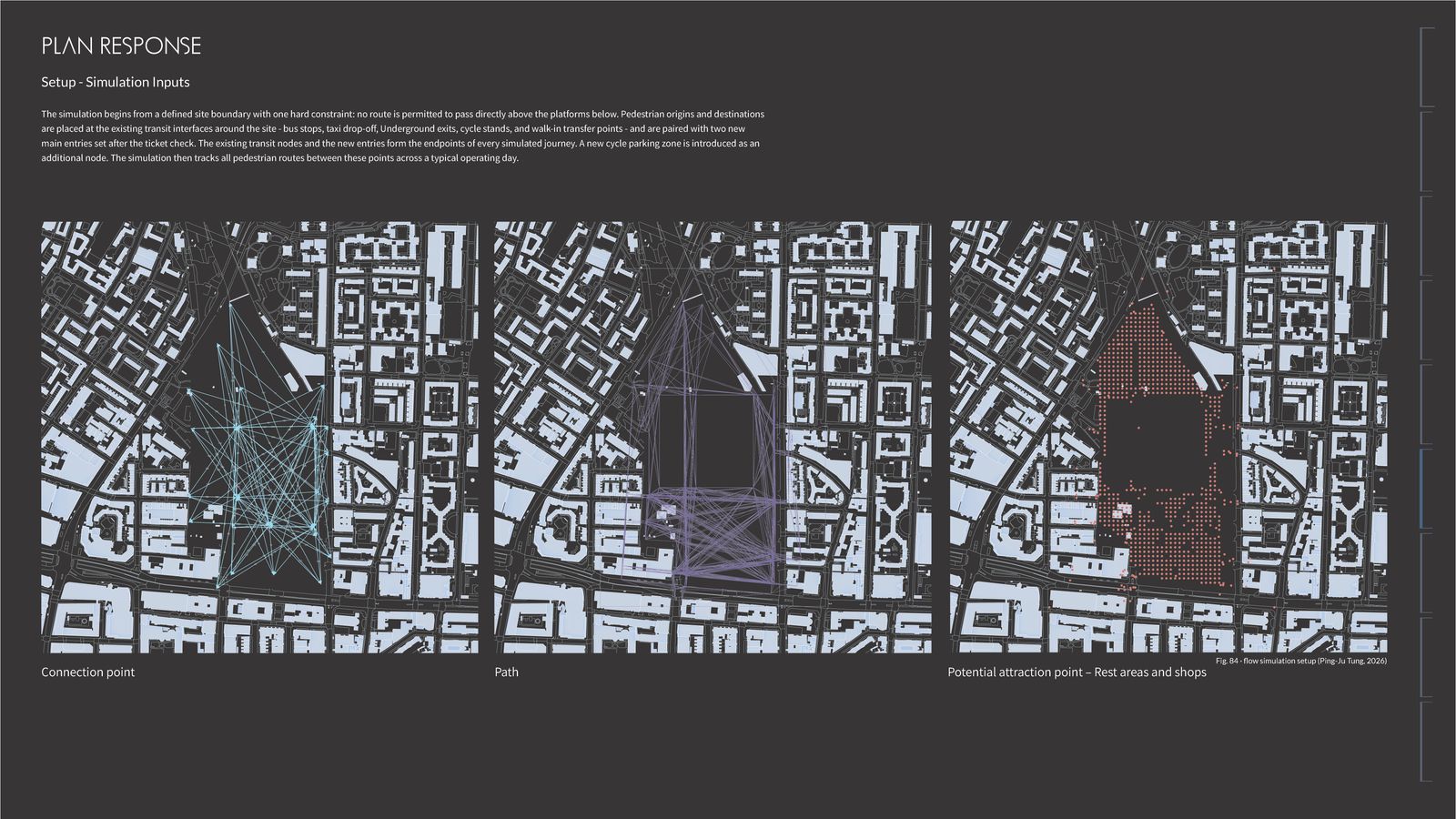
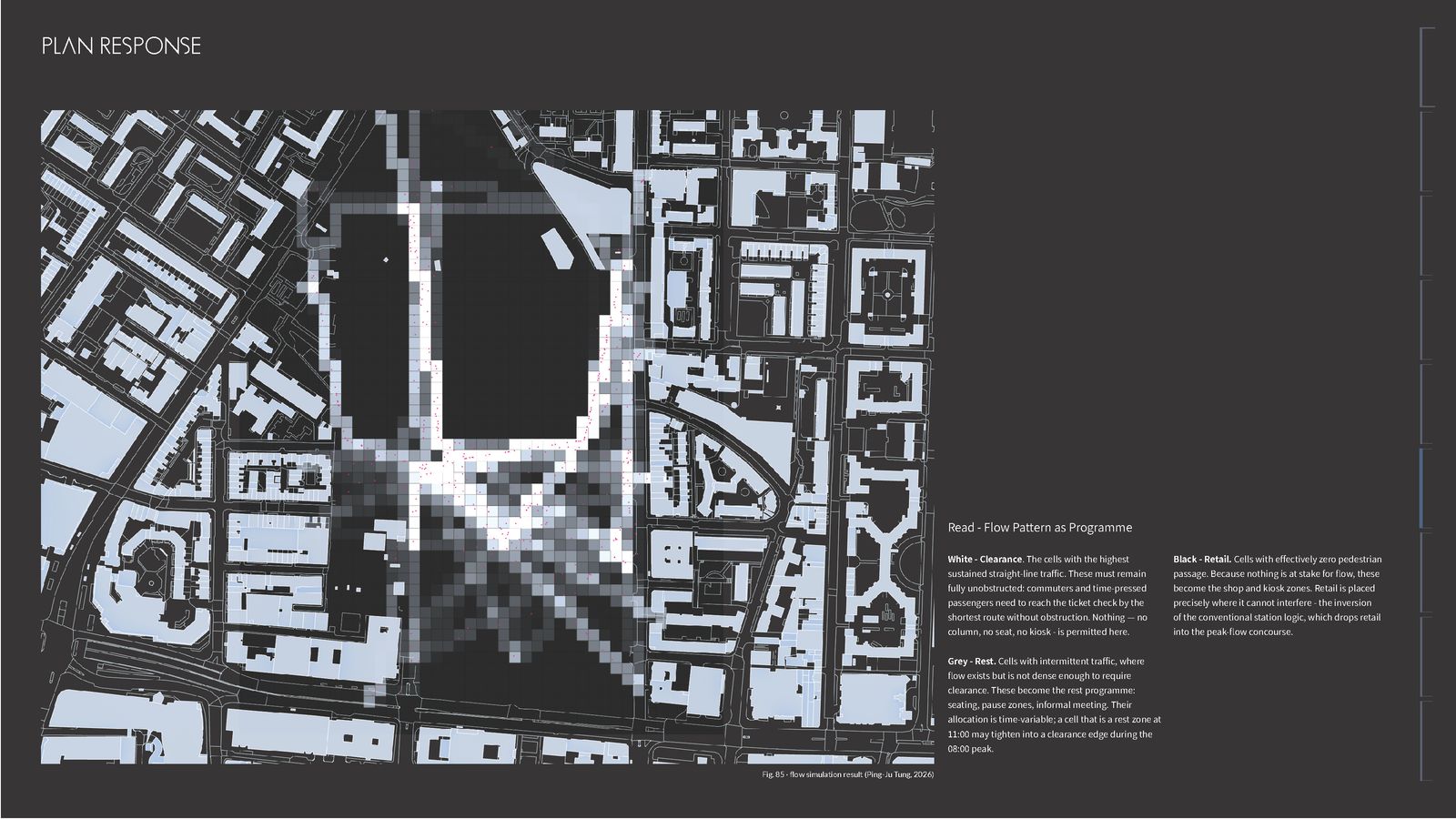
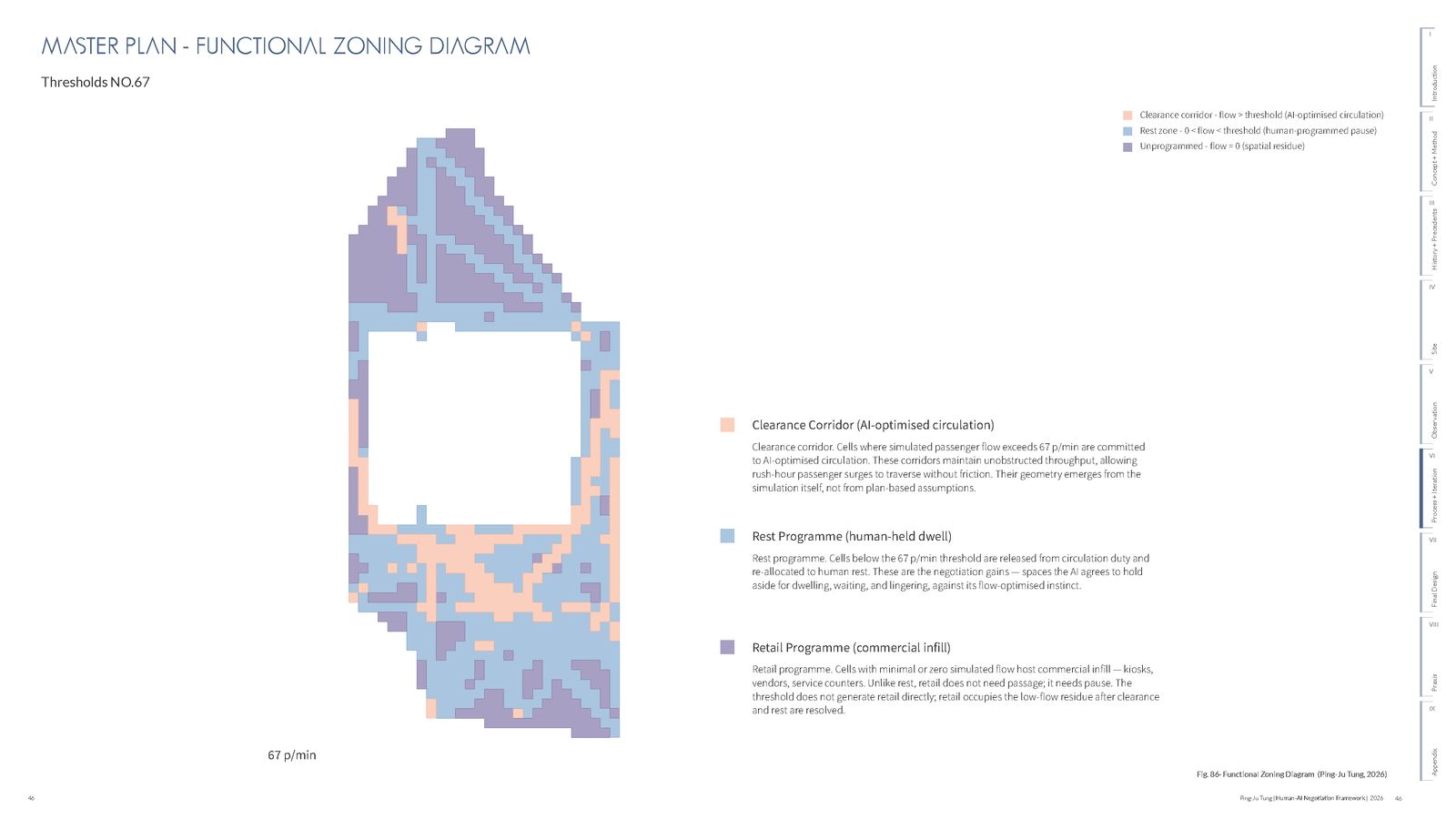
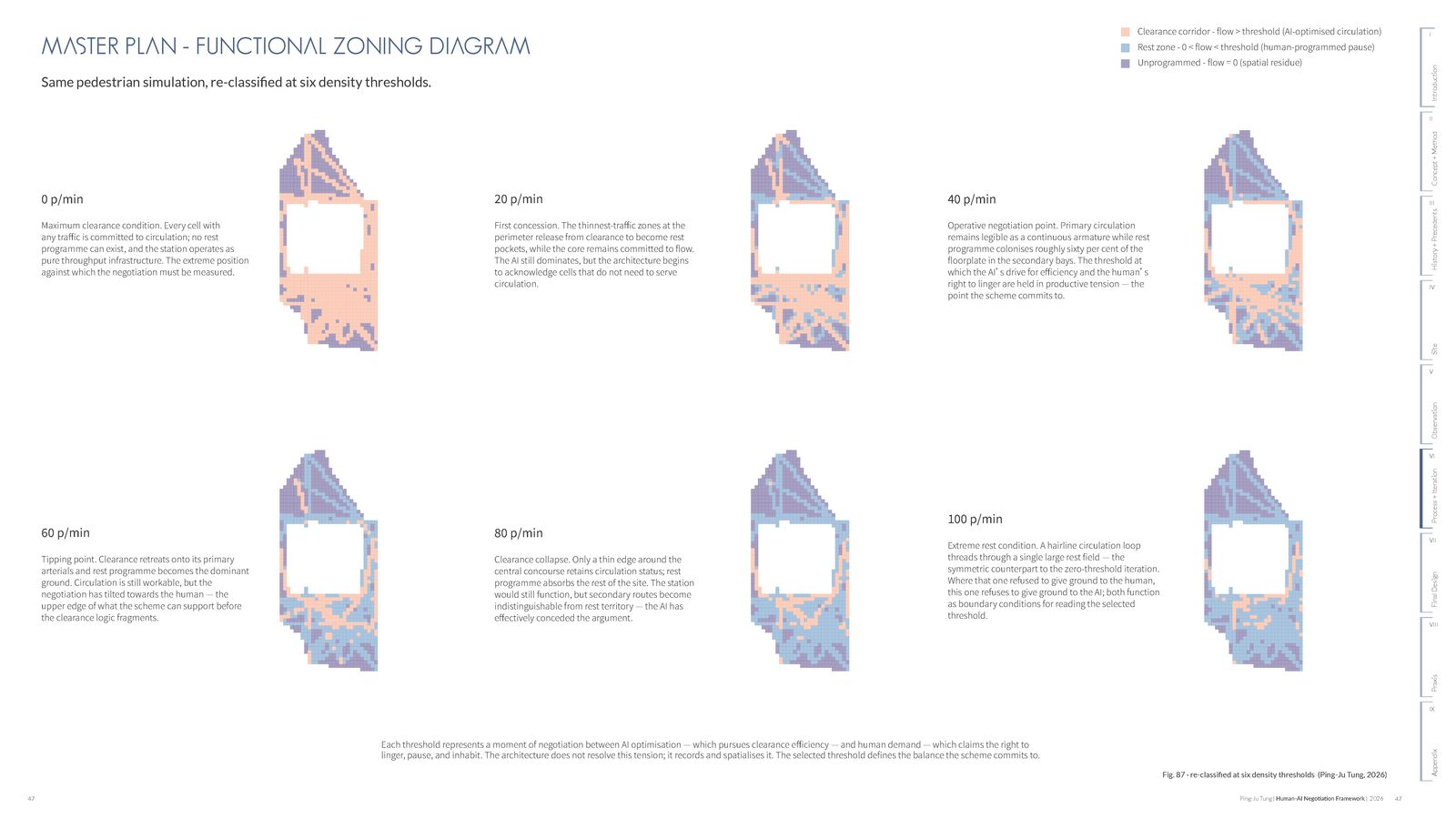
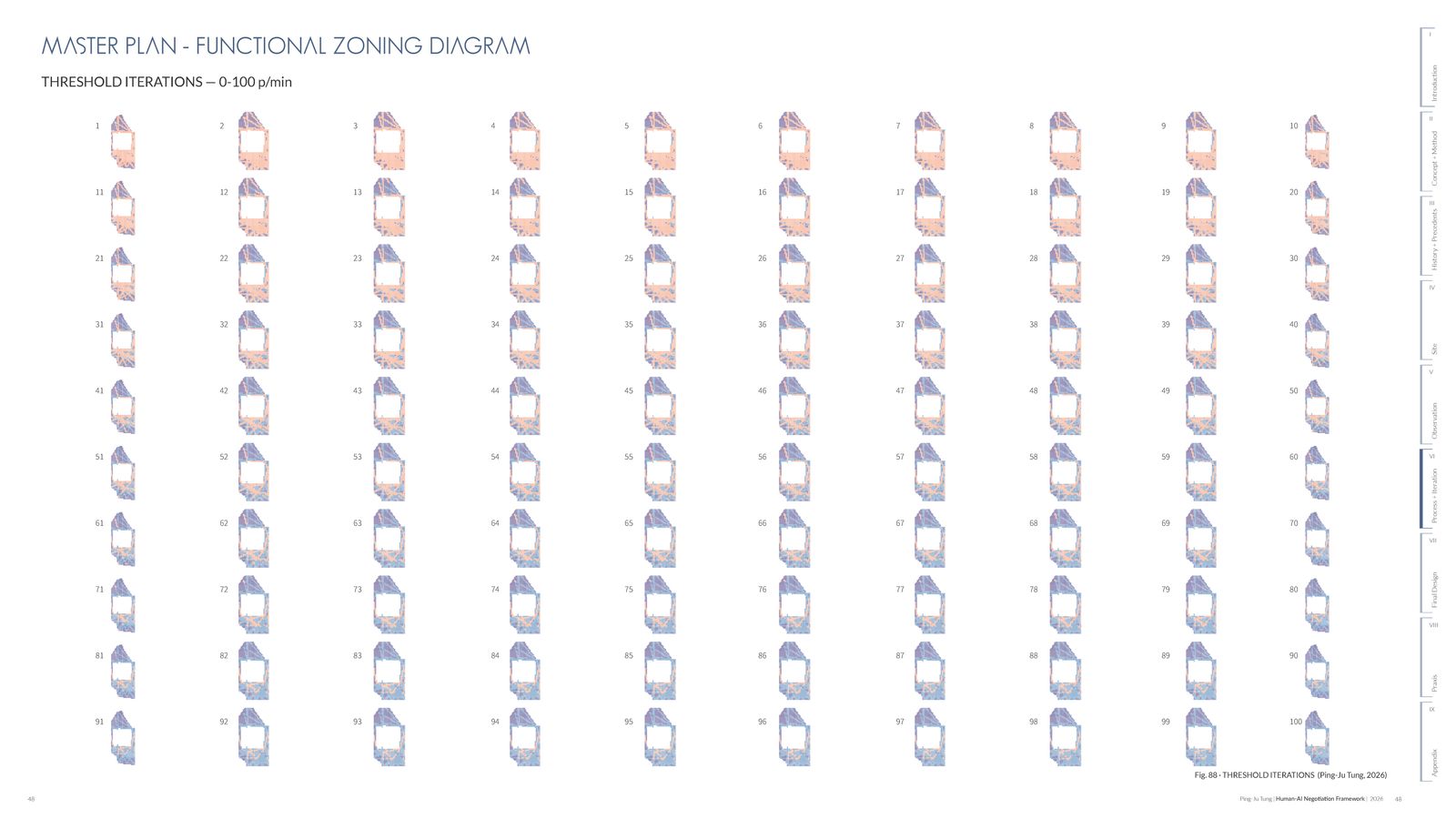
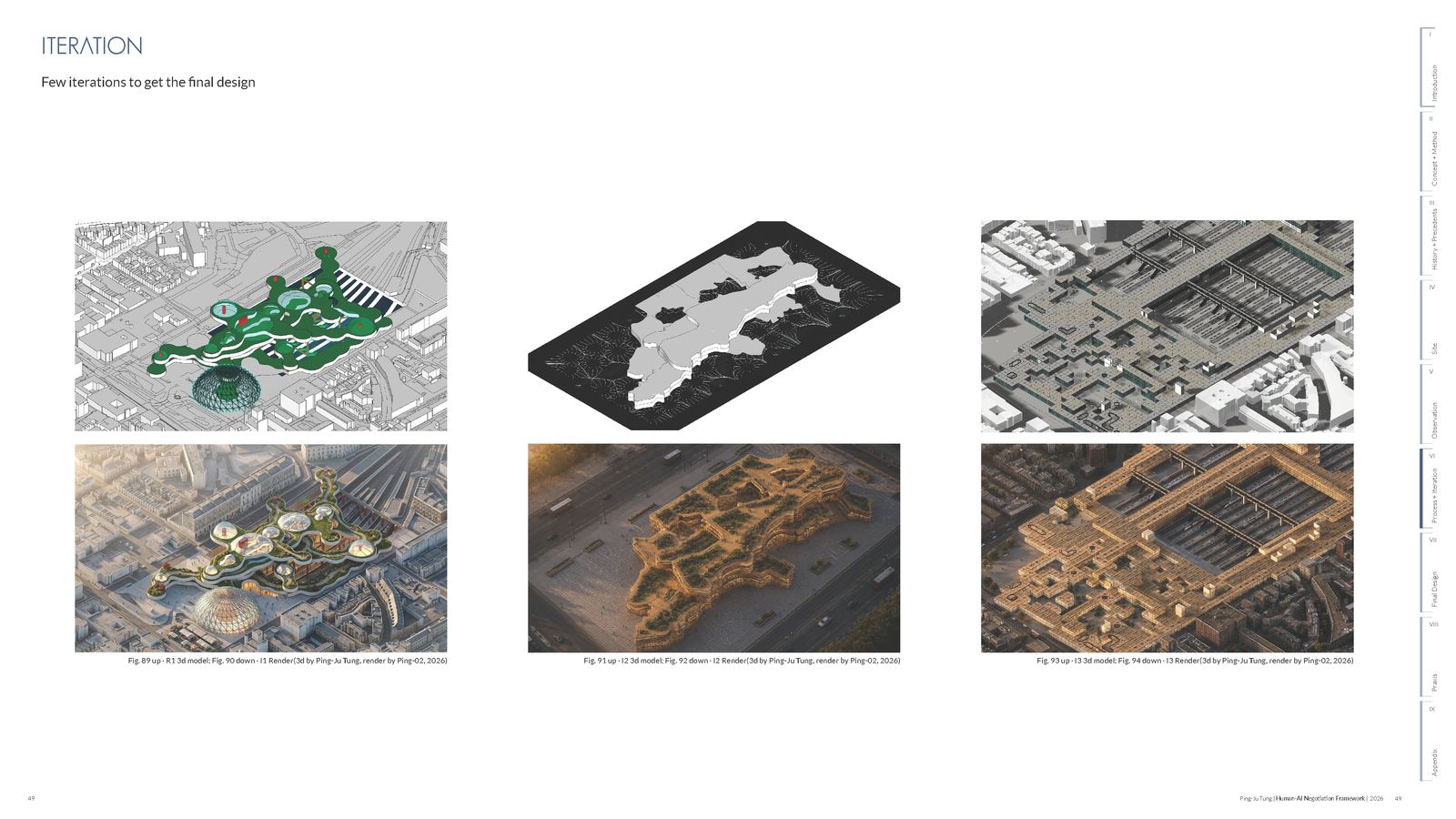
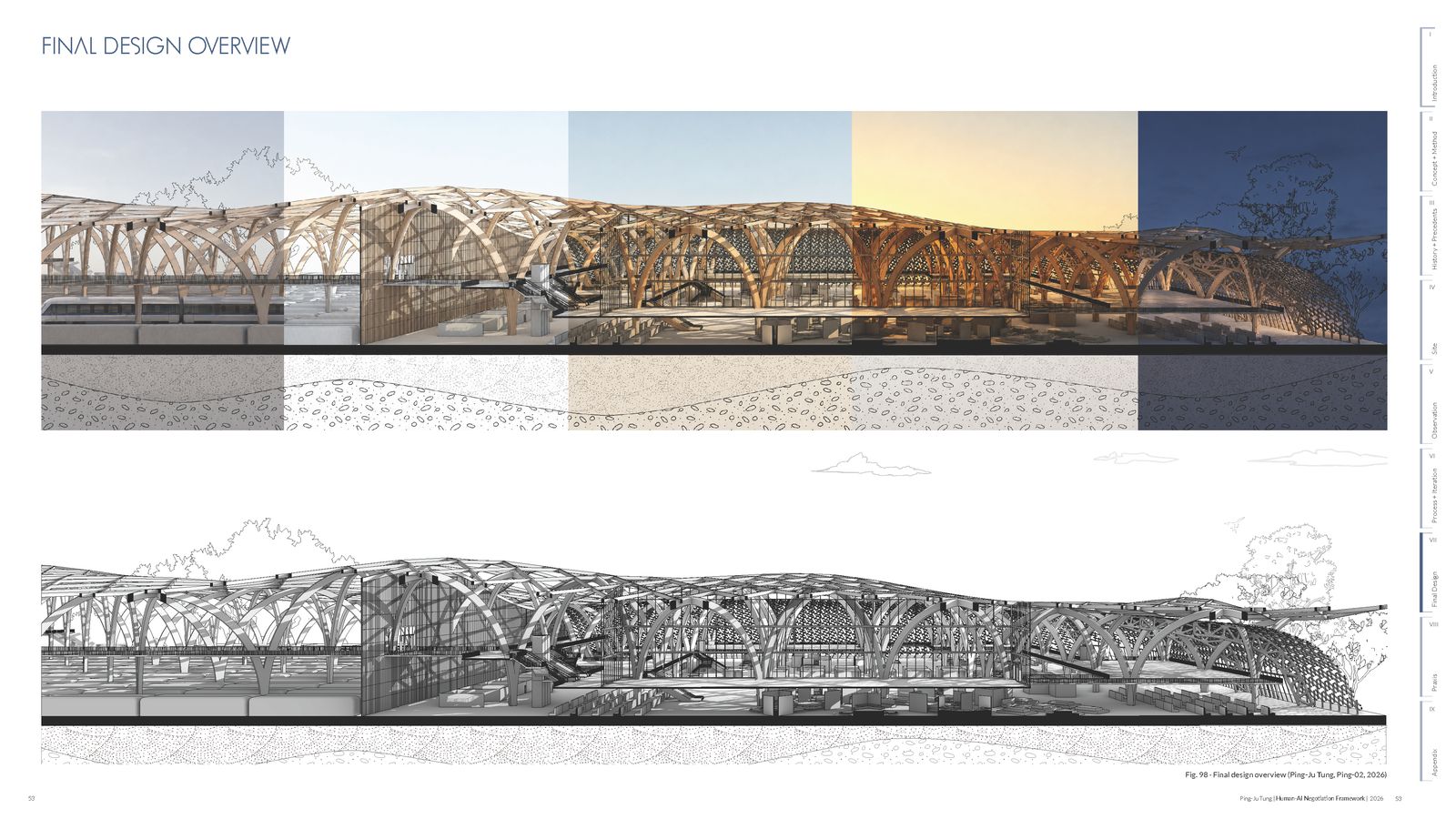
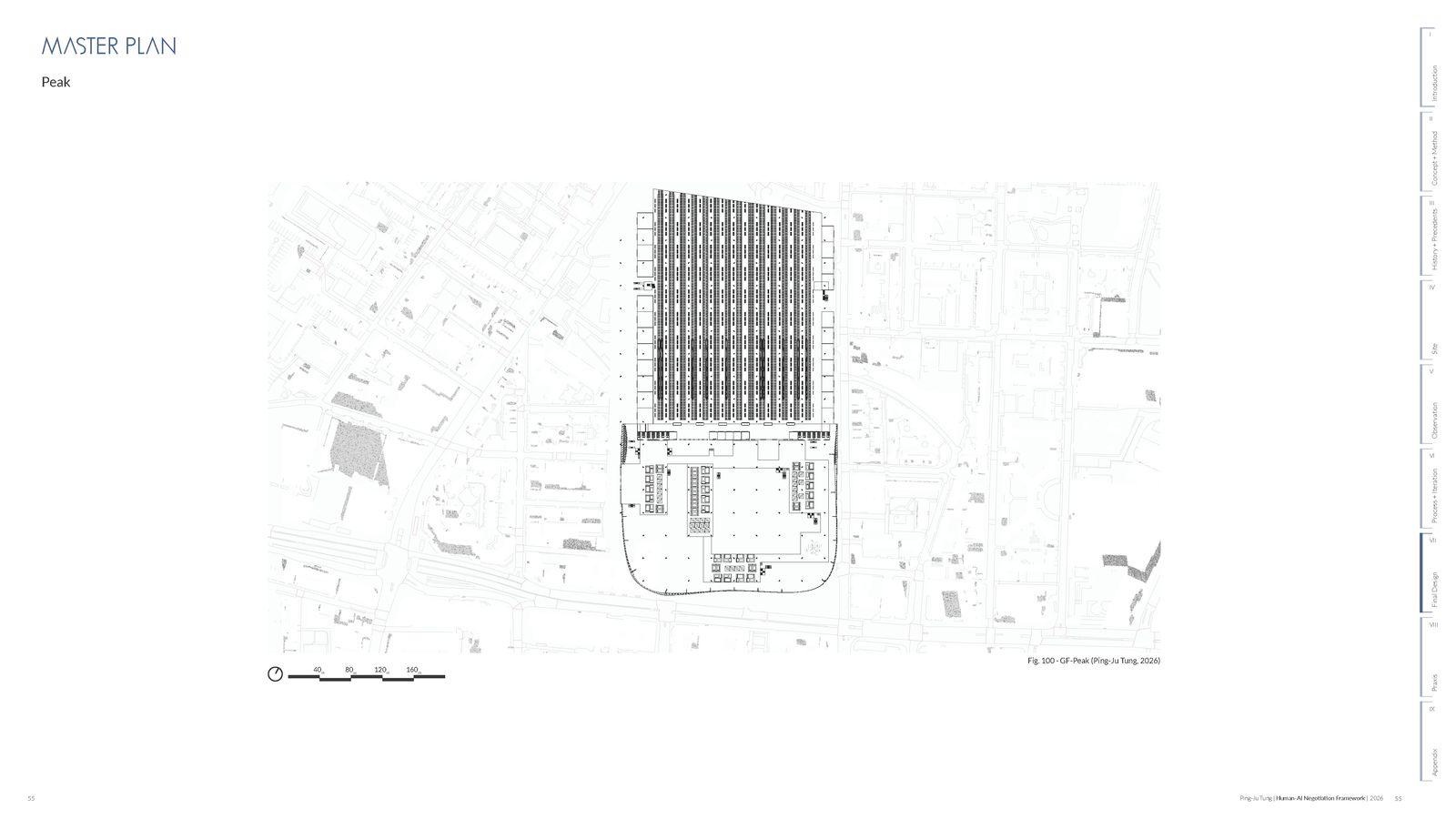
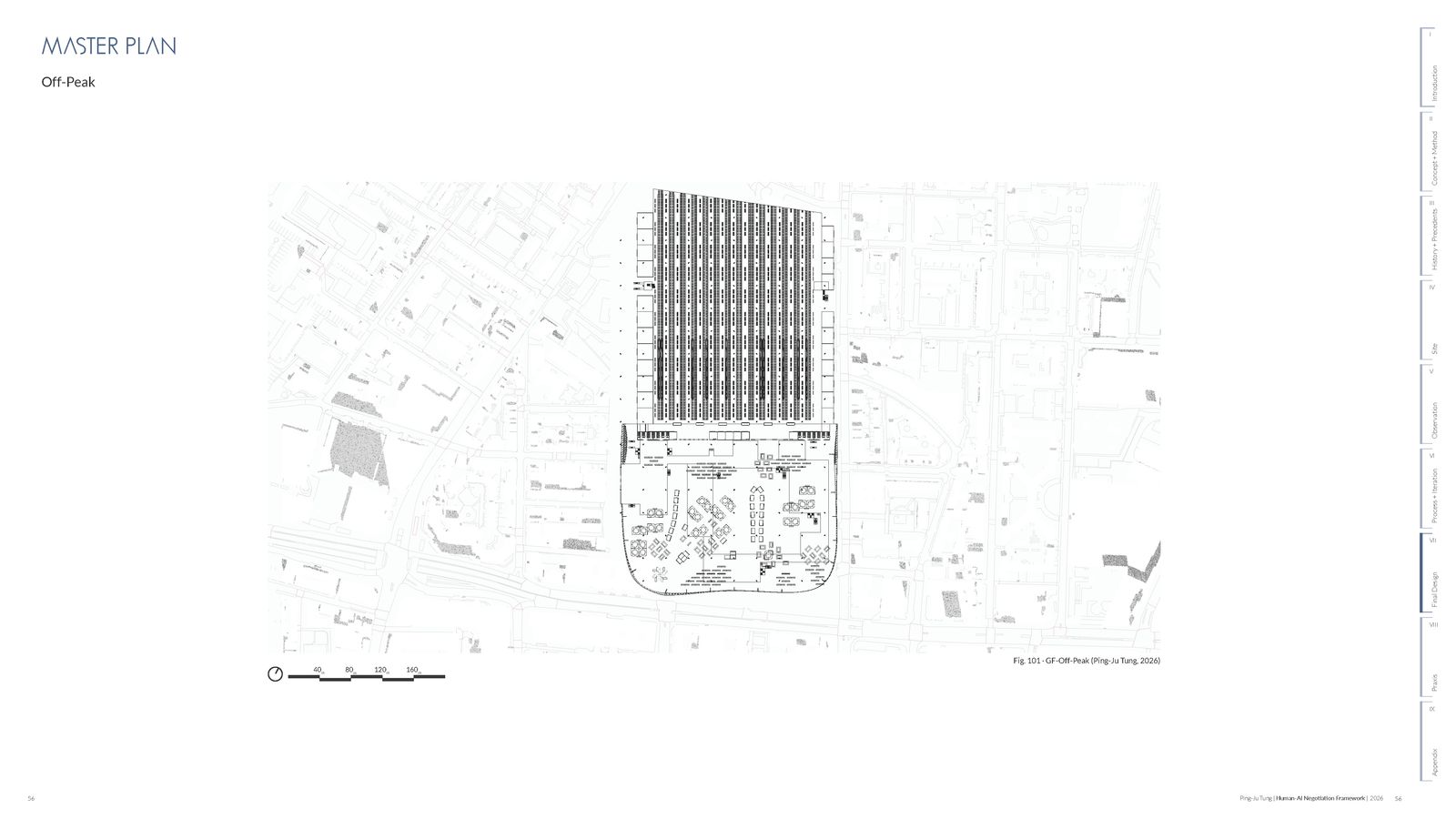
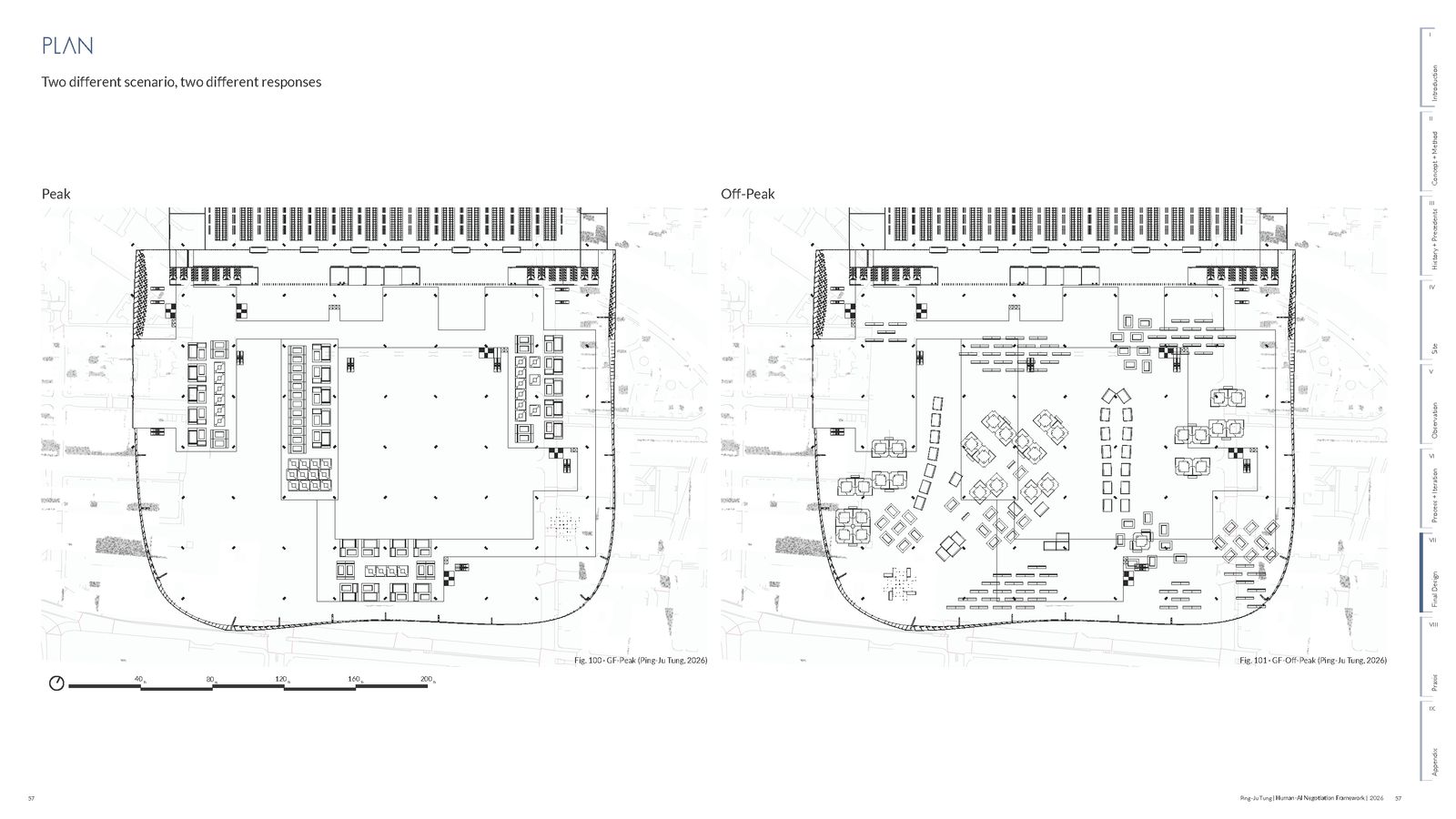
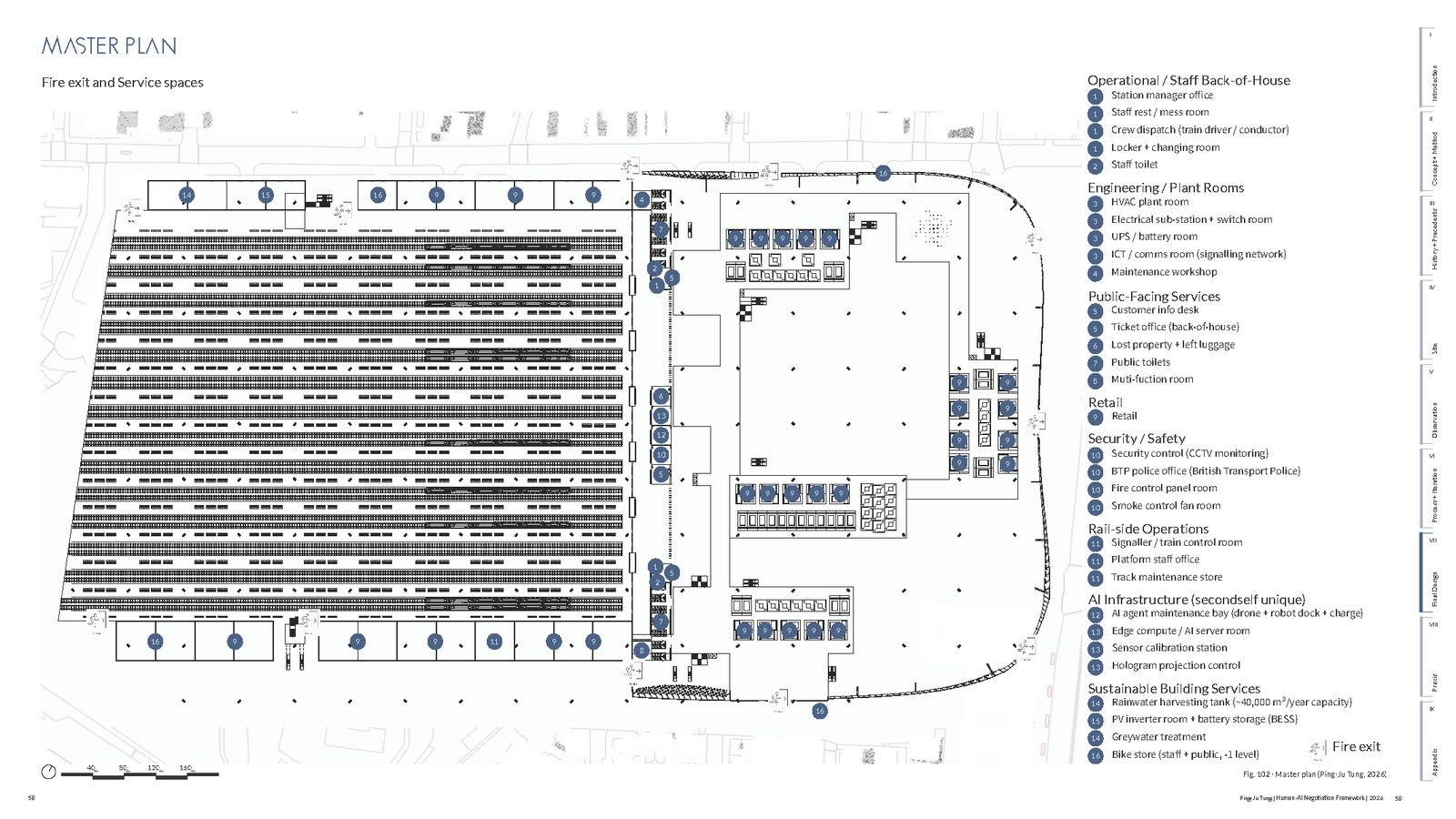
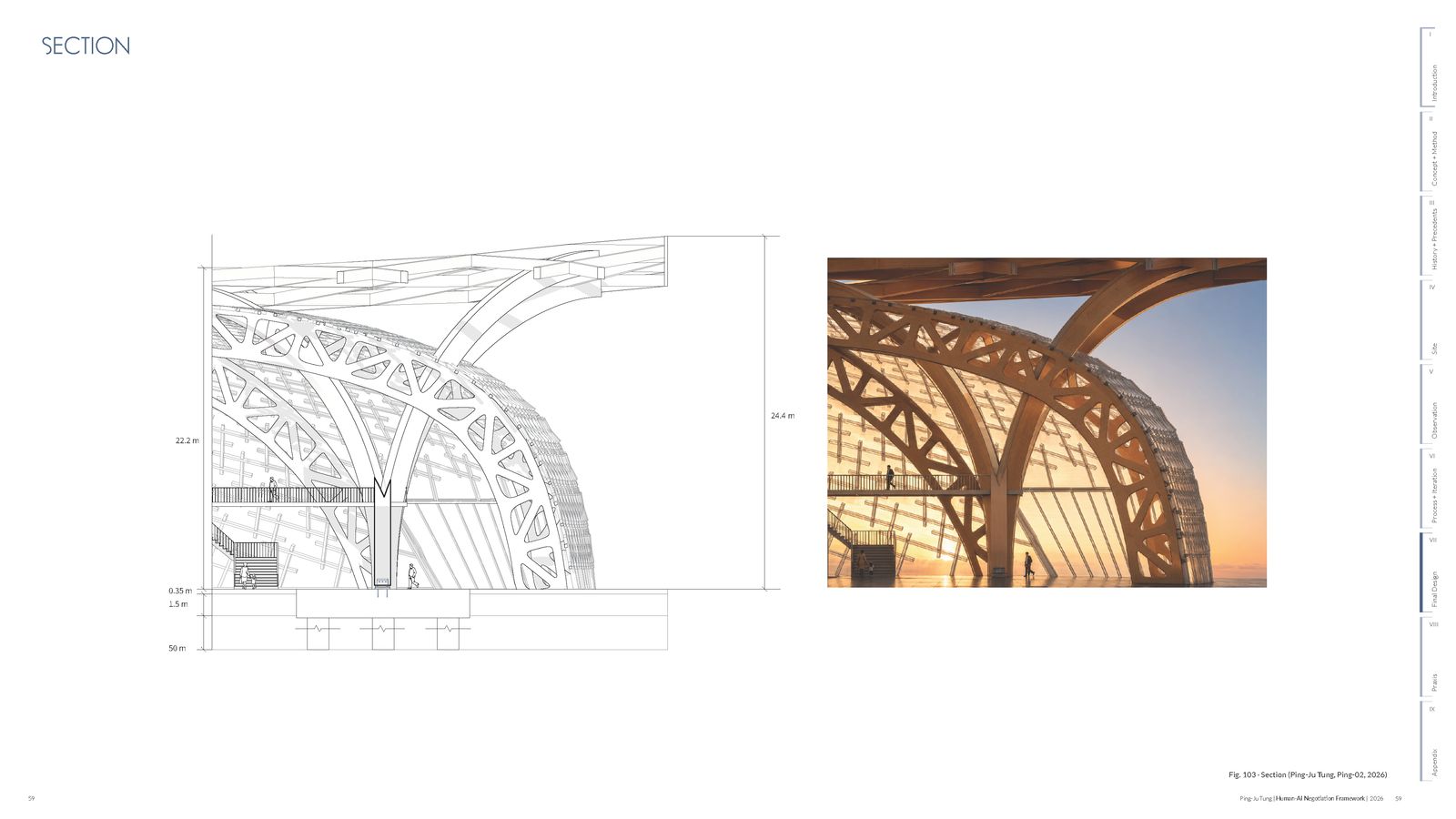
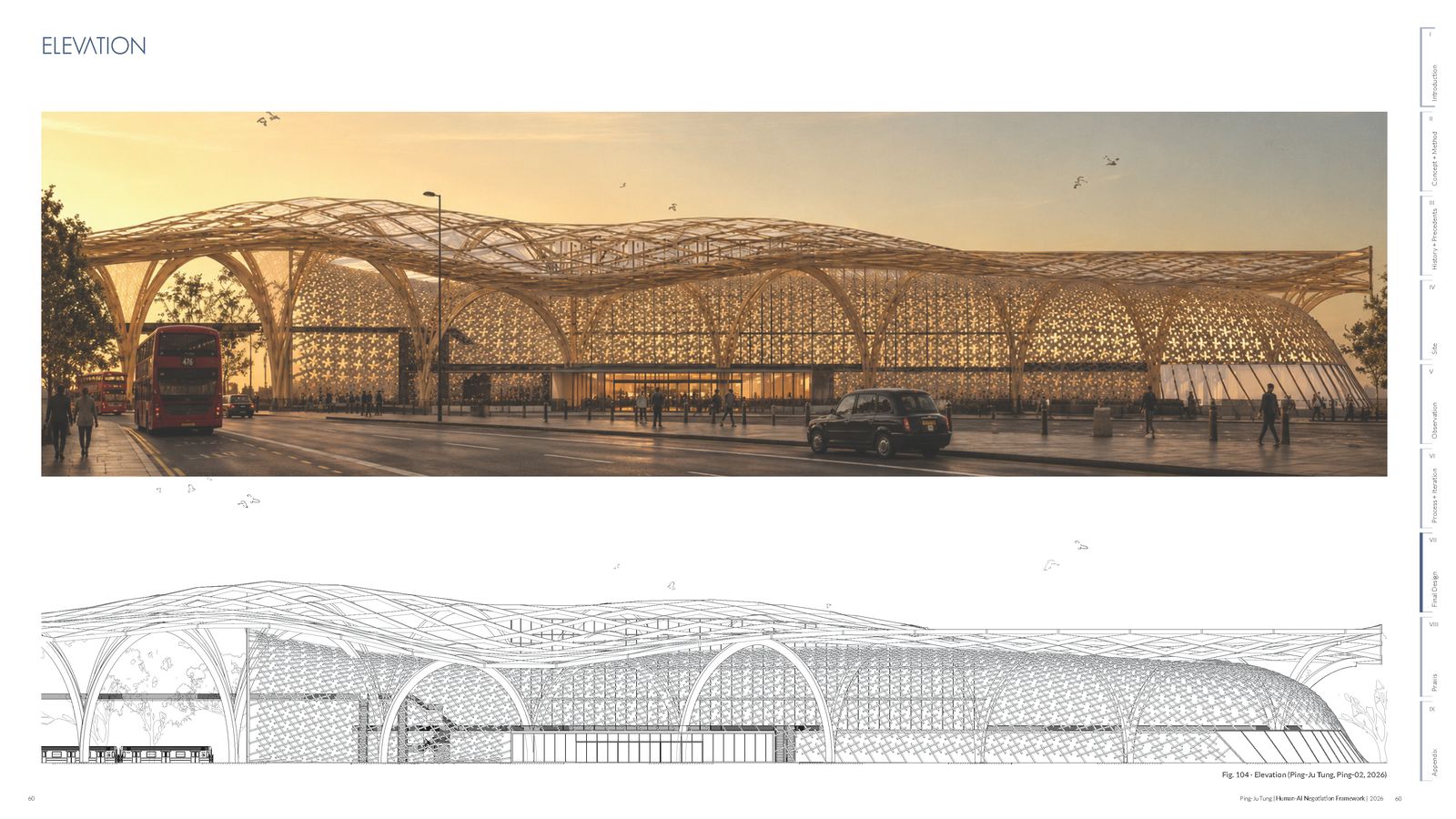
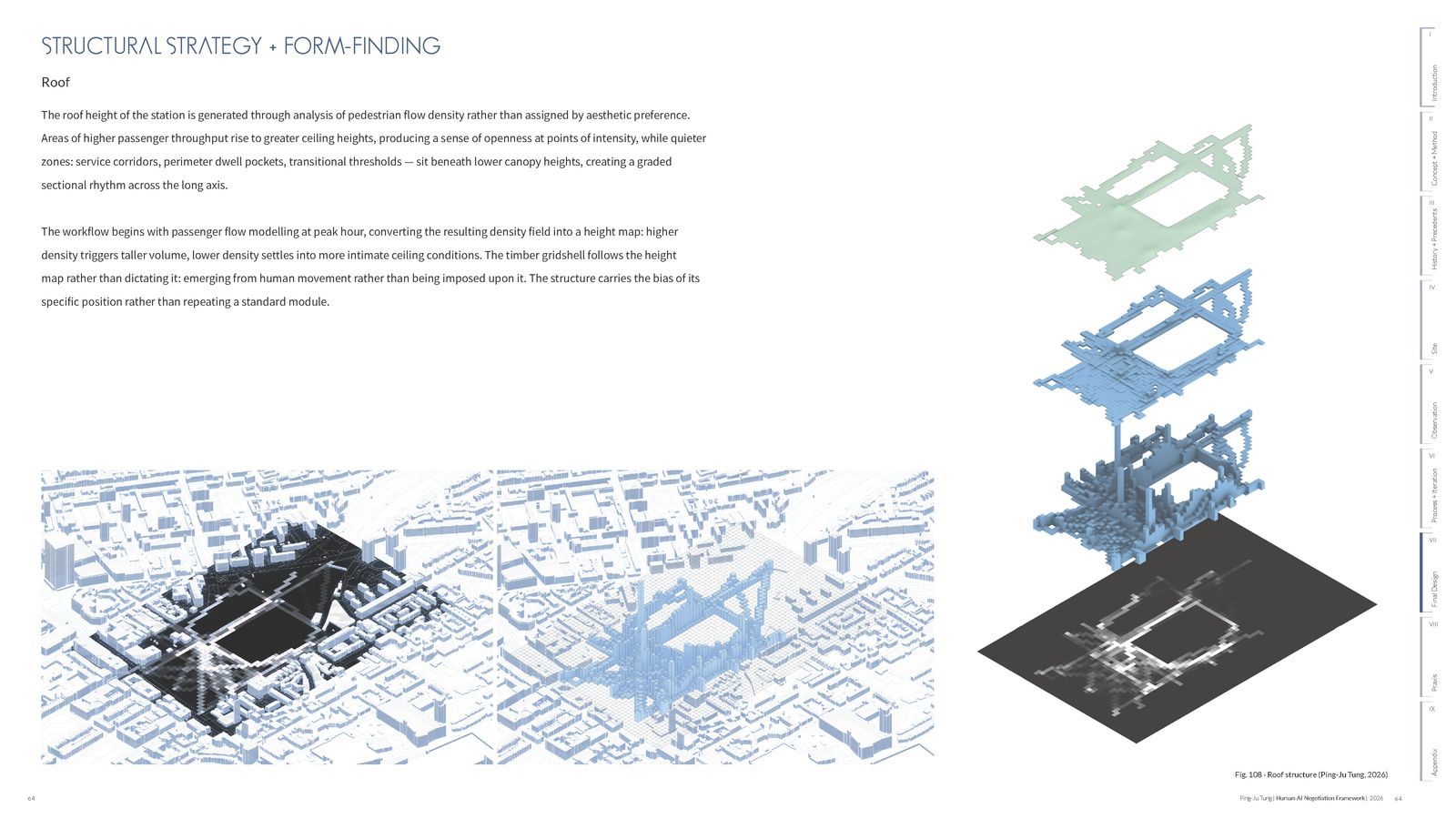
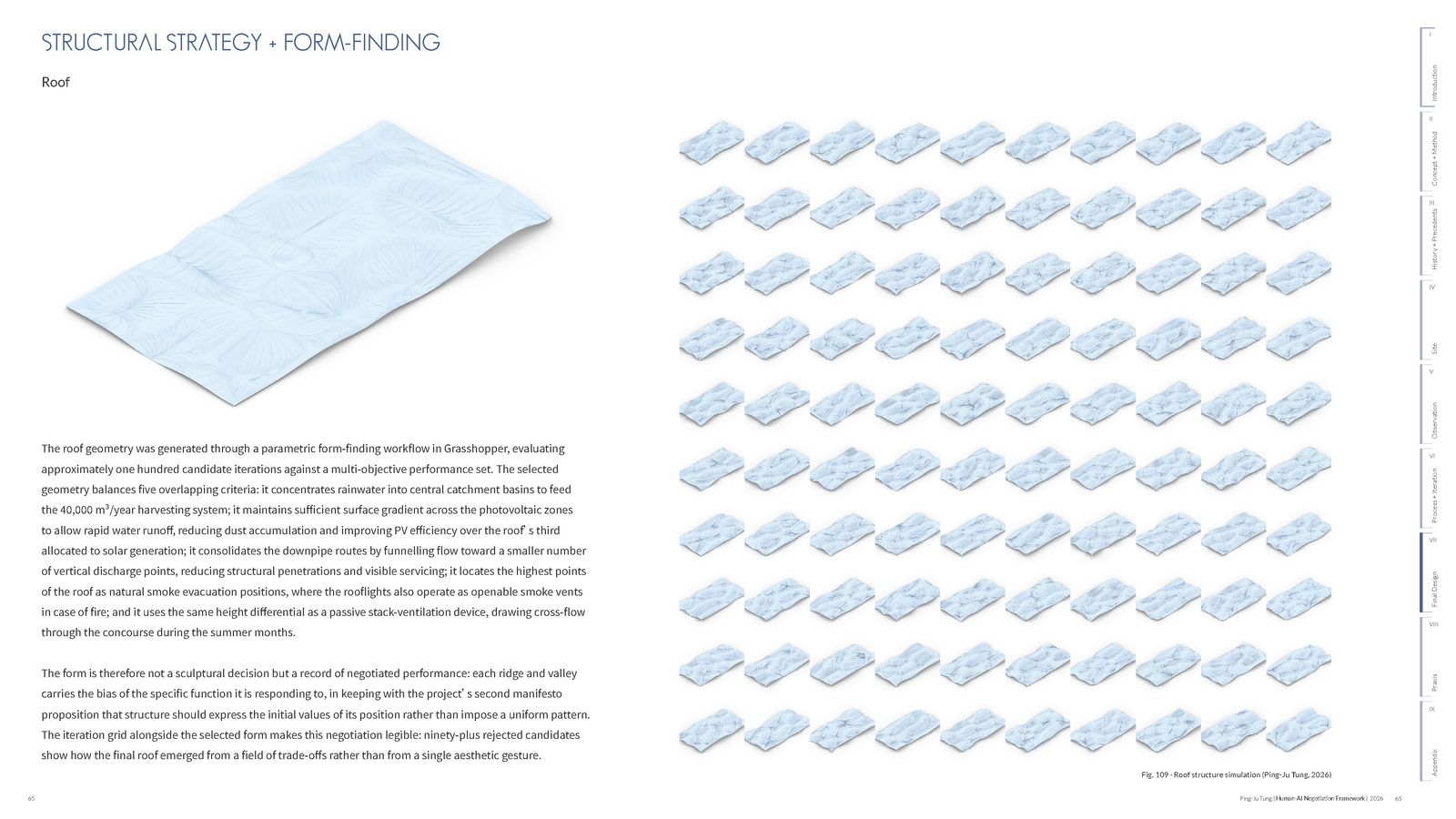
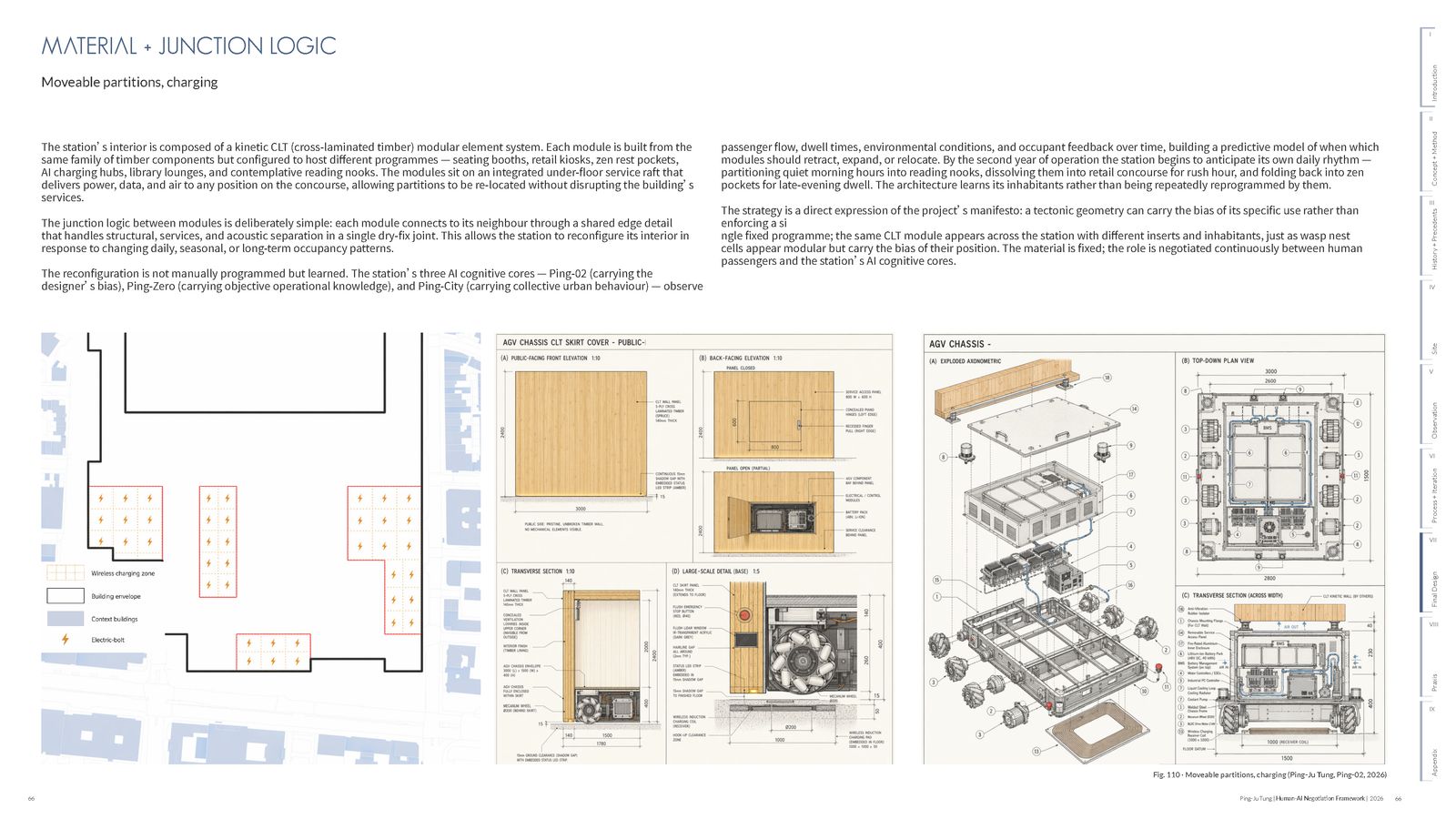
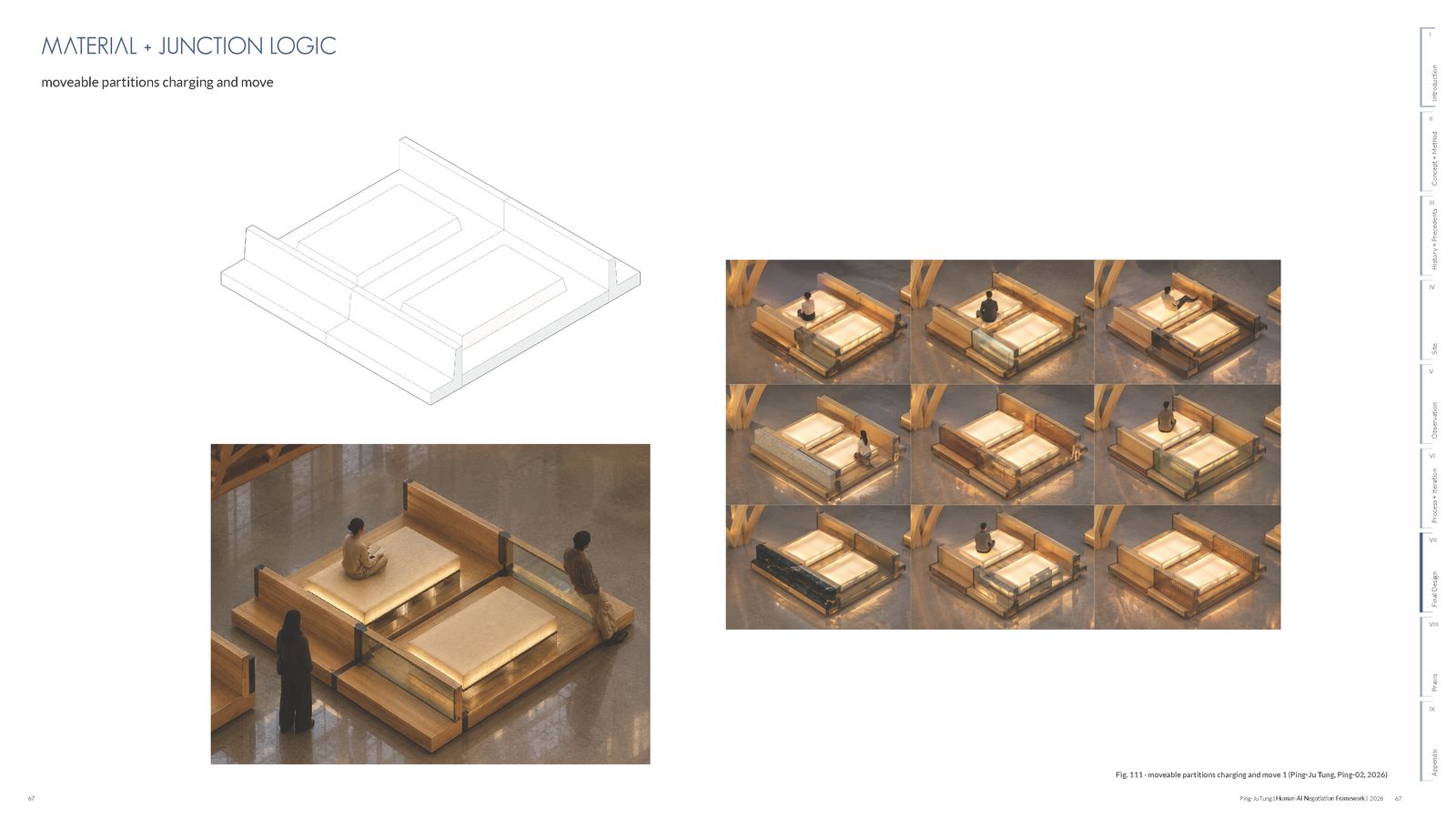
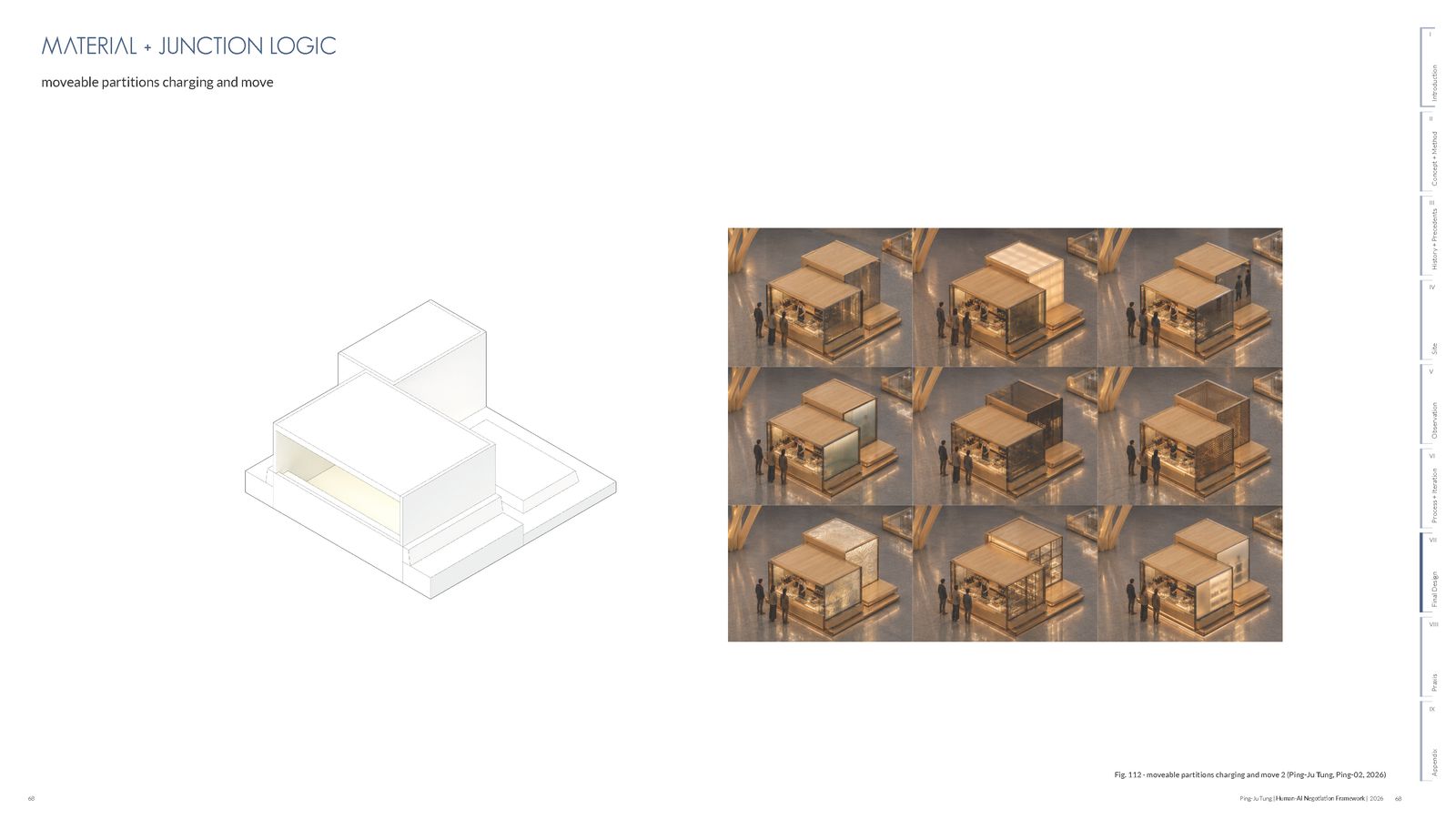
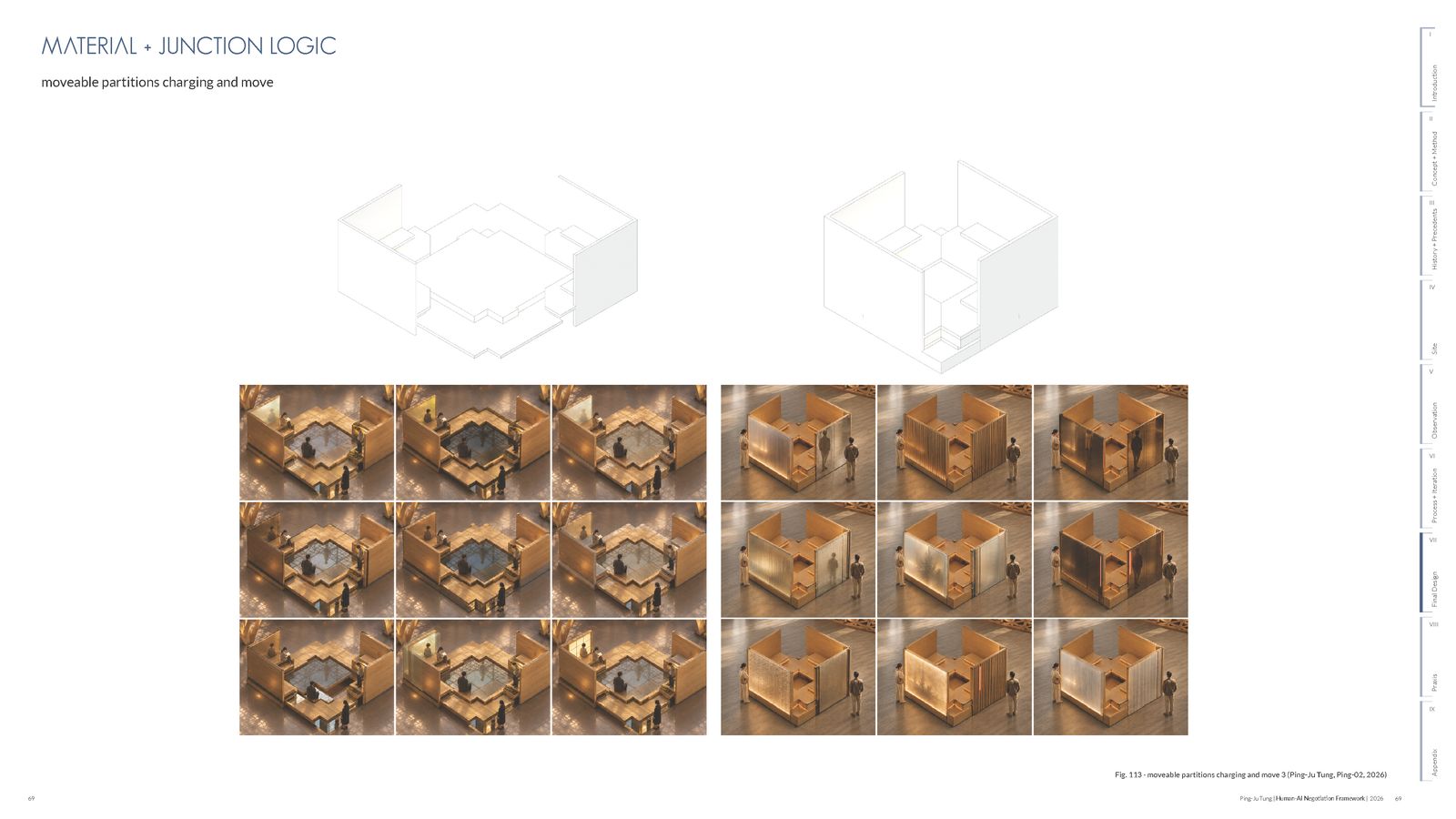
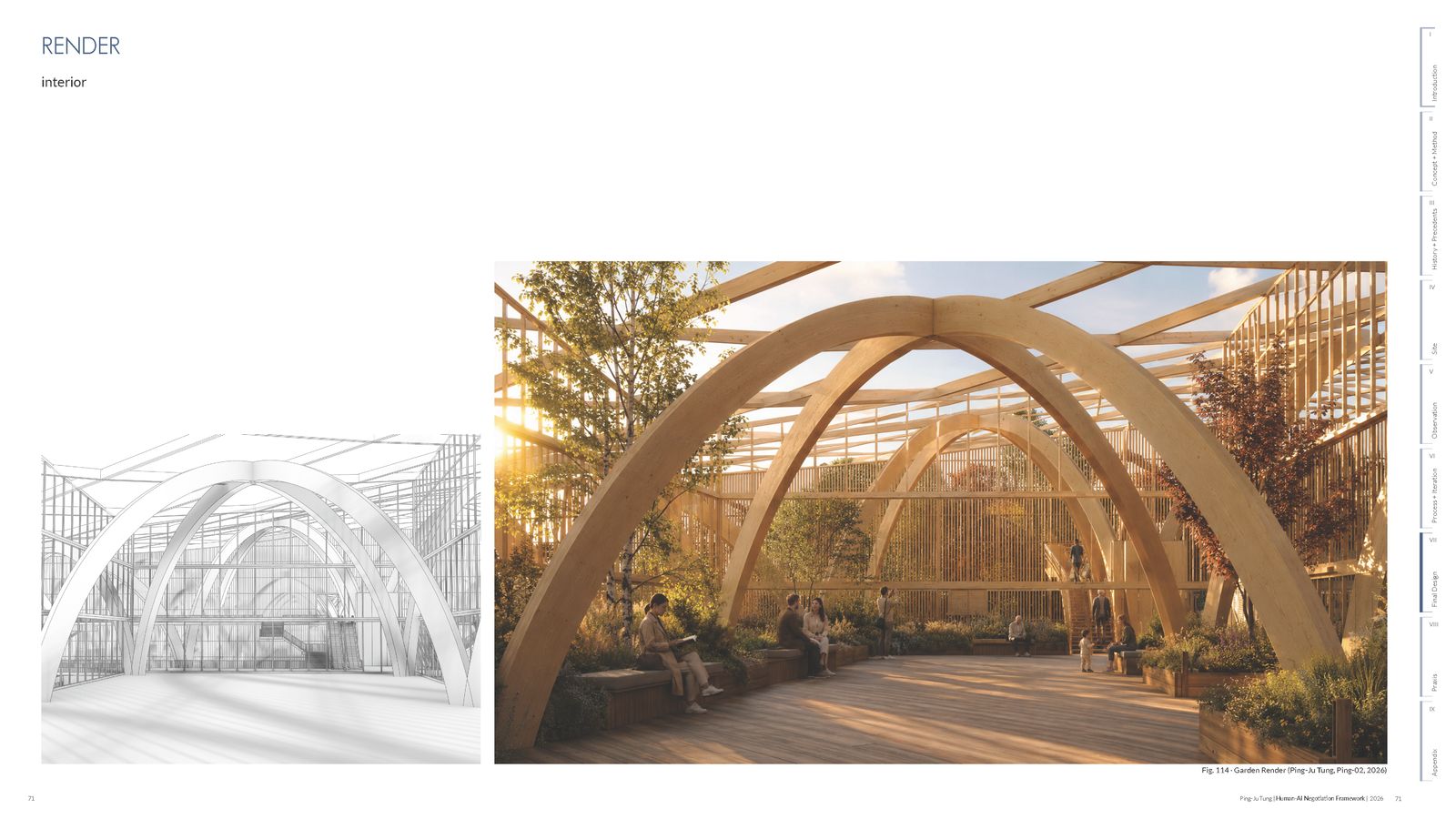
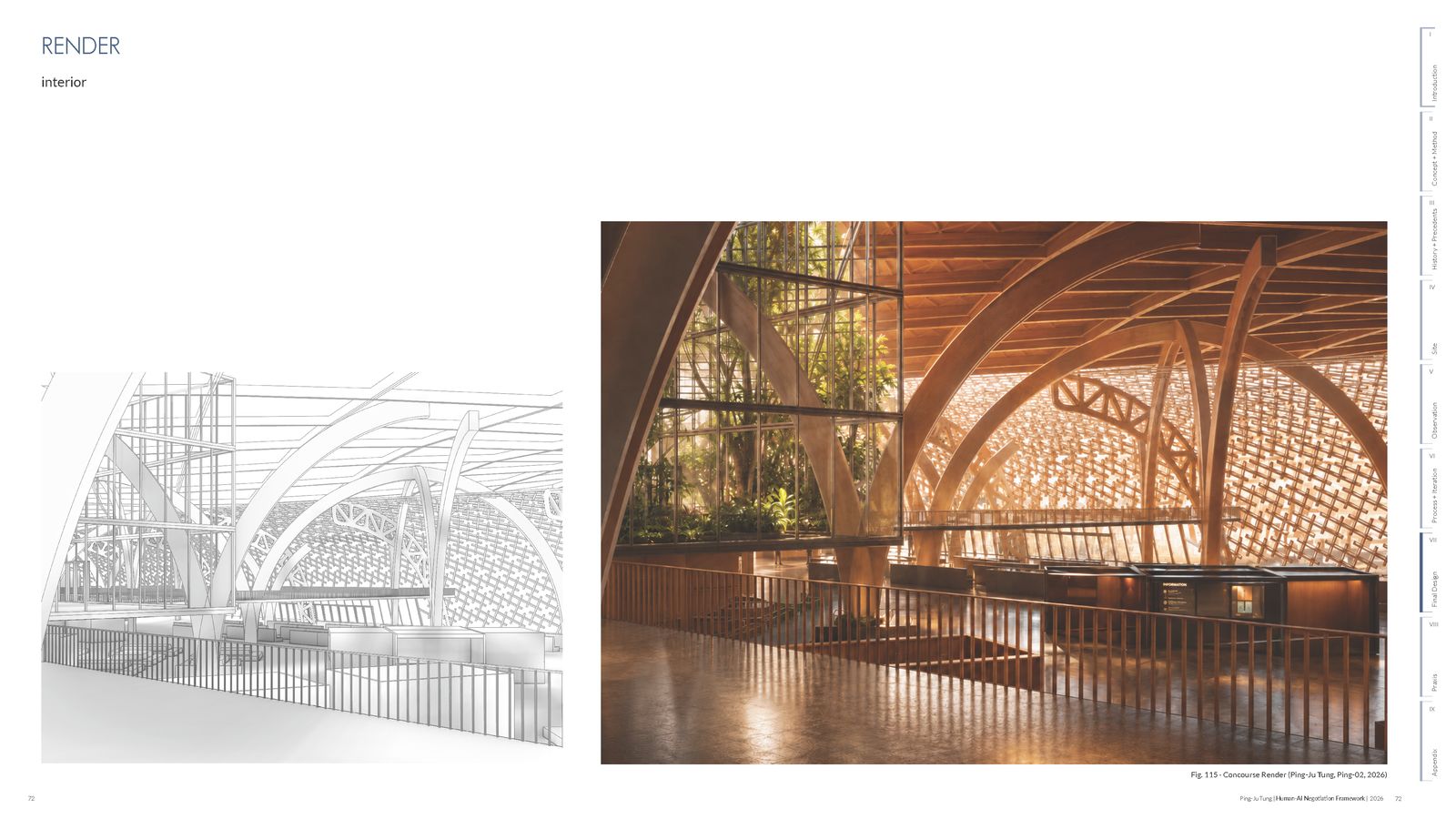
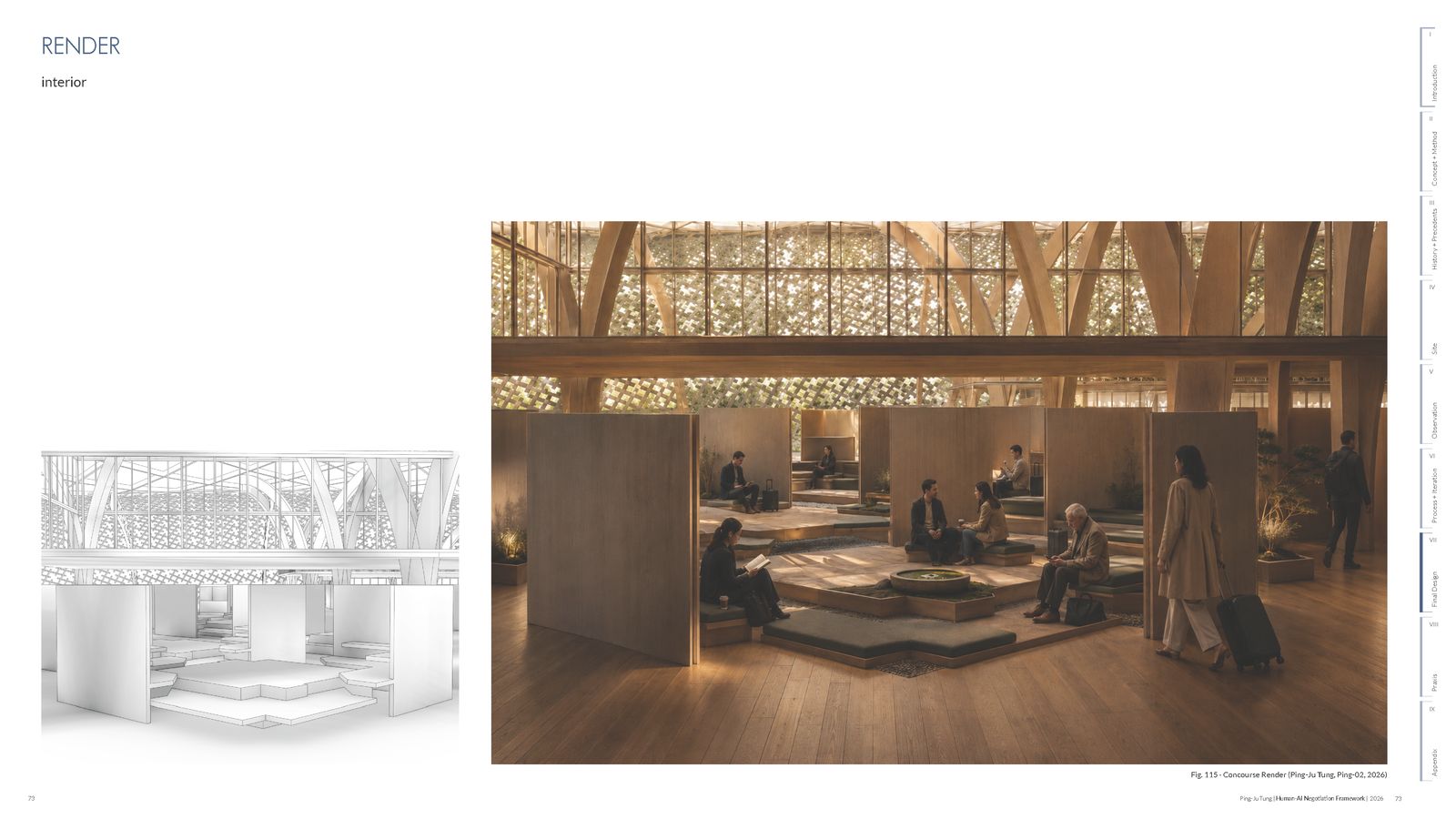
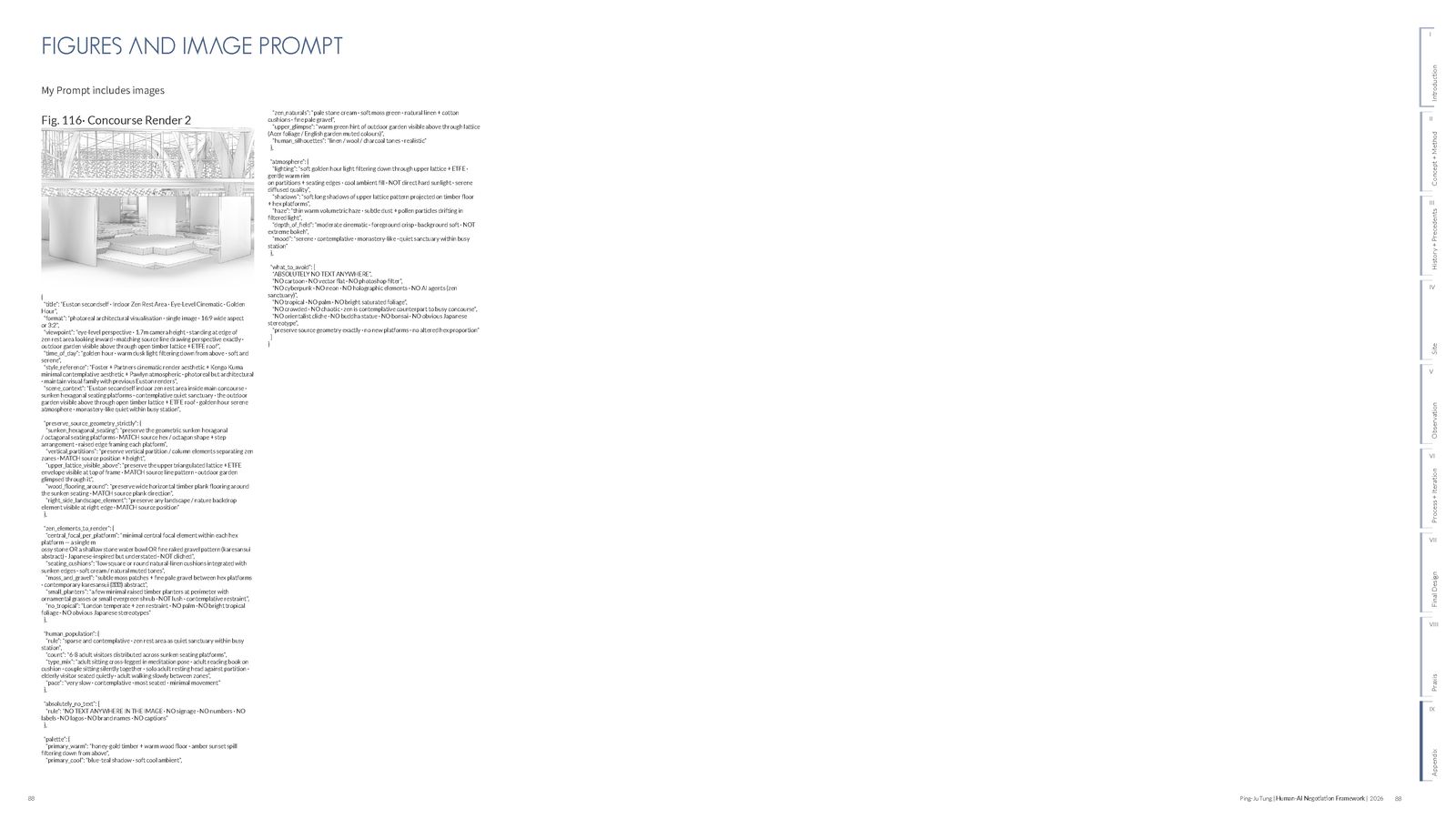
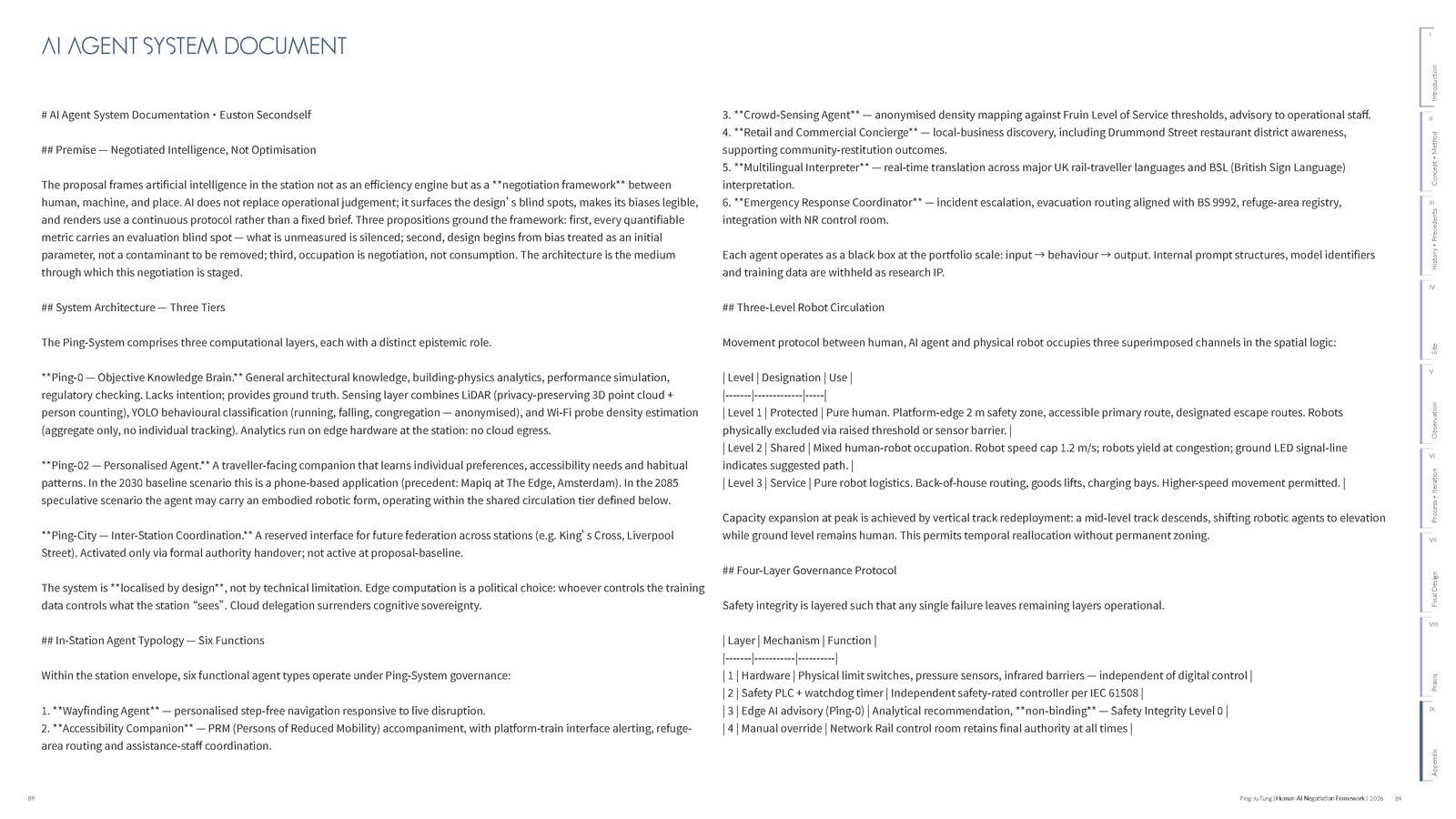
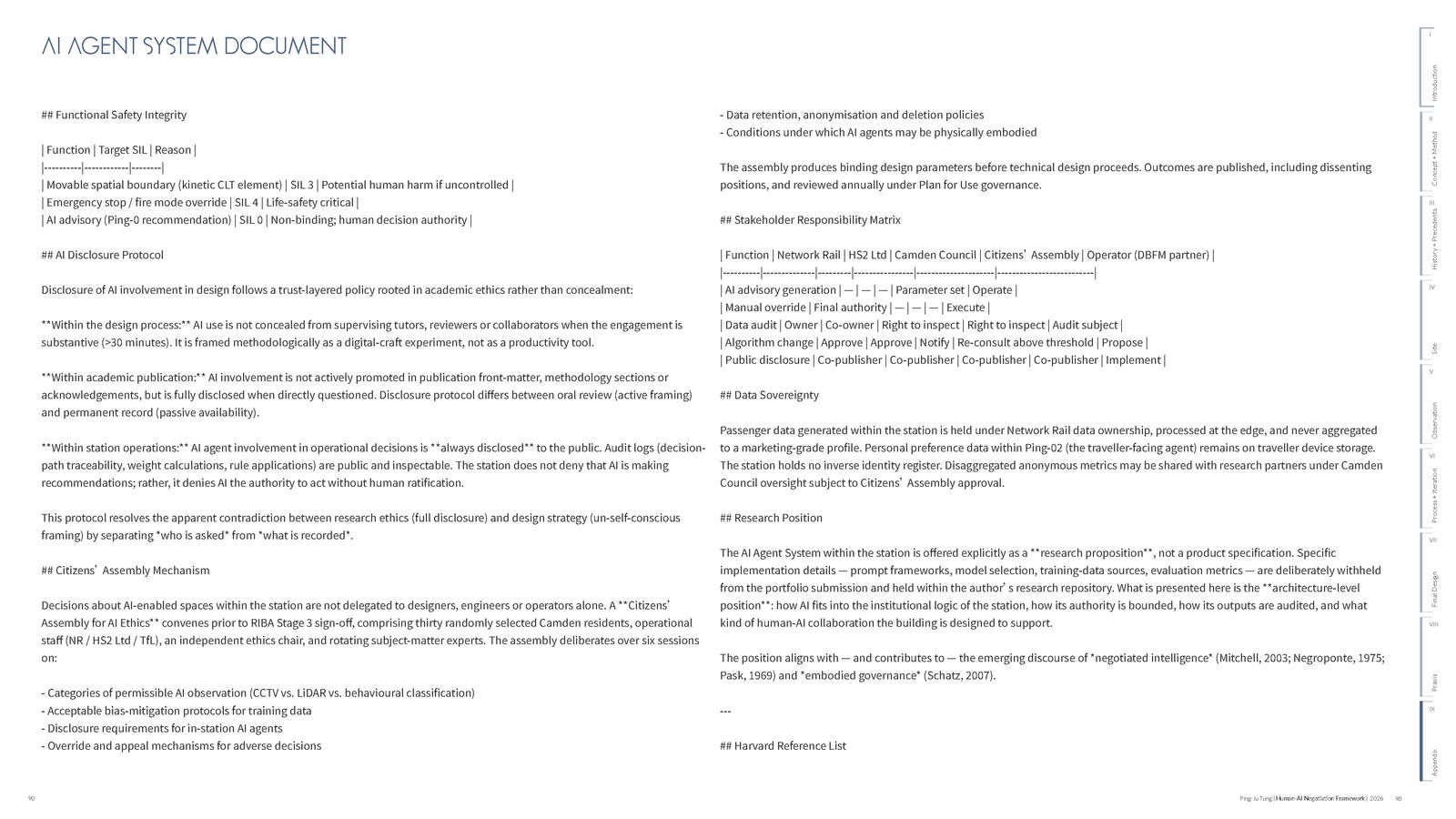
The Euston concourse, redesigned as a Human-AI Negotiation Framework: not a smart building that optimises for people, but an architecture where humans and an AI share the decision over how space is used. A CLT and glulam hybrid bay on a 10 m by 10 m grid carries a site-wide adjustable green canopy and sensor-driven kinetic boundaries, so every decision the AI makes becomes a physical change passengers can see. Structural behaviour drives the form (Karamba), pedestrian flow drives the plan (QGIS), and the AI negotiates between them rather than optimising one.
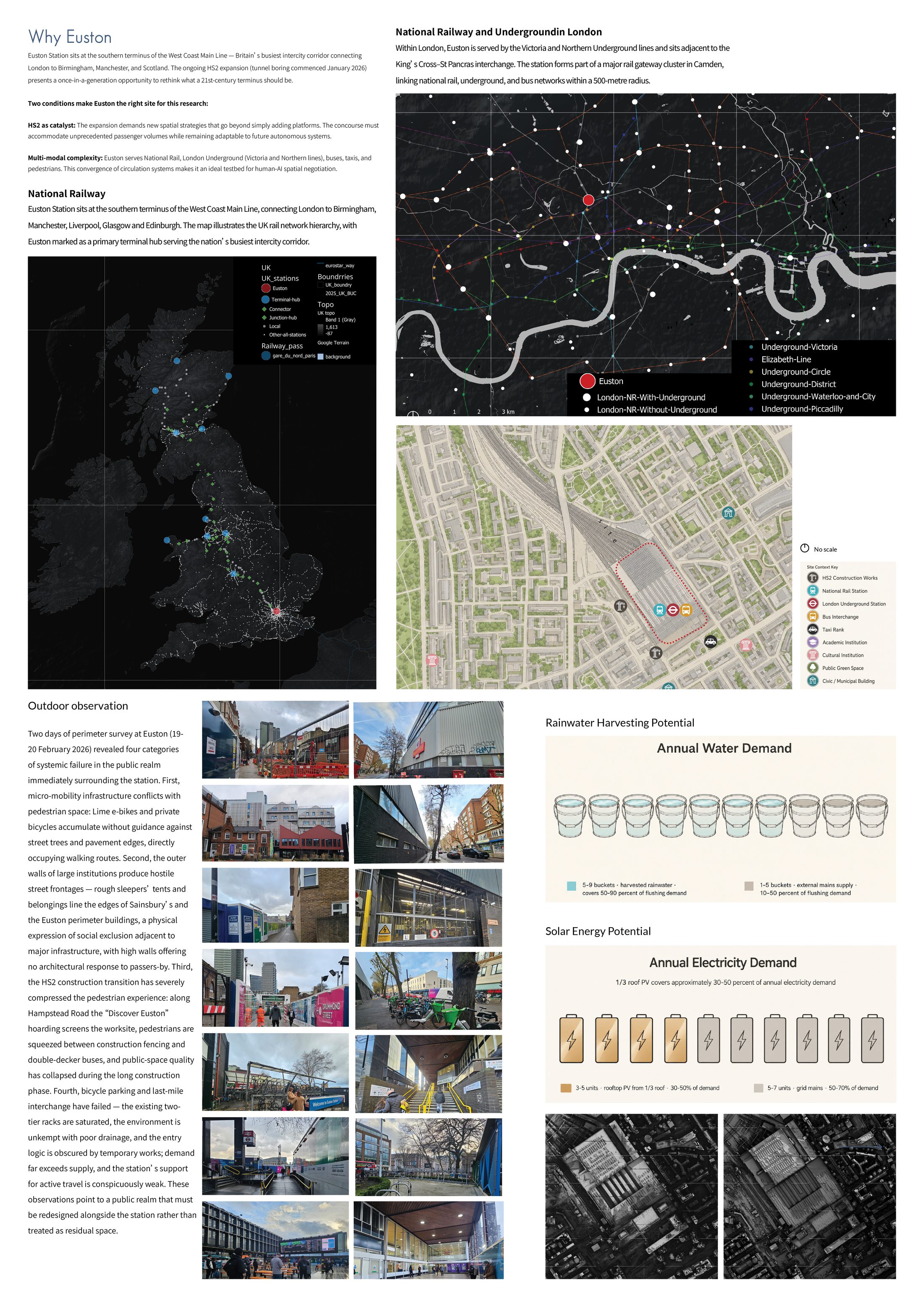
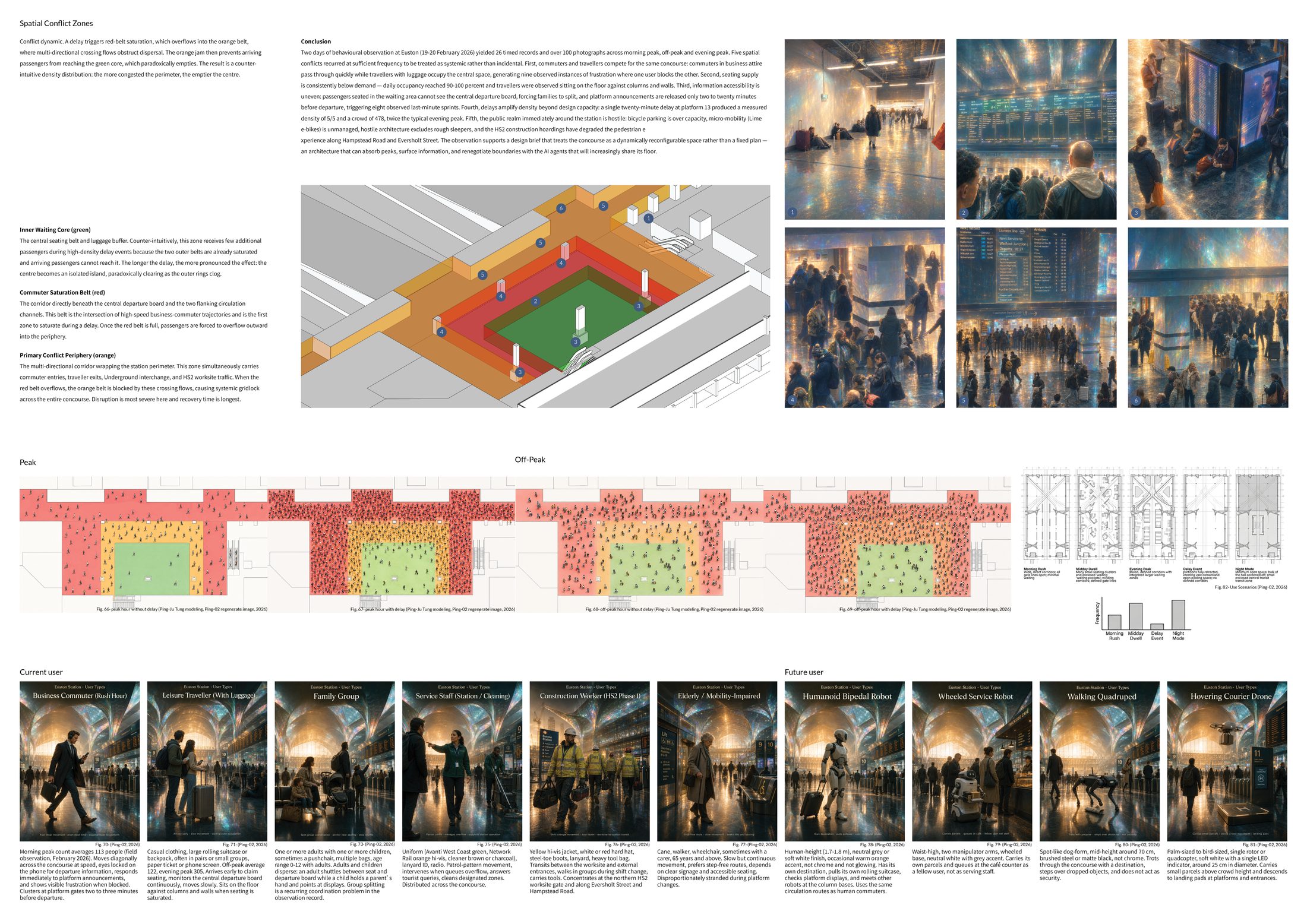
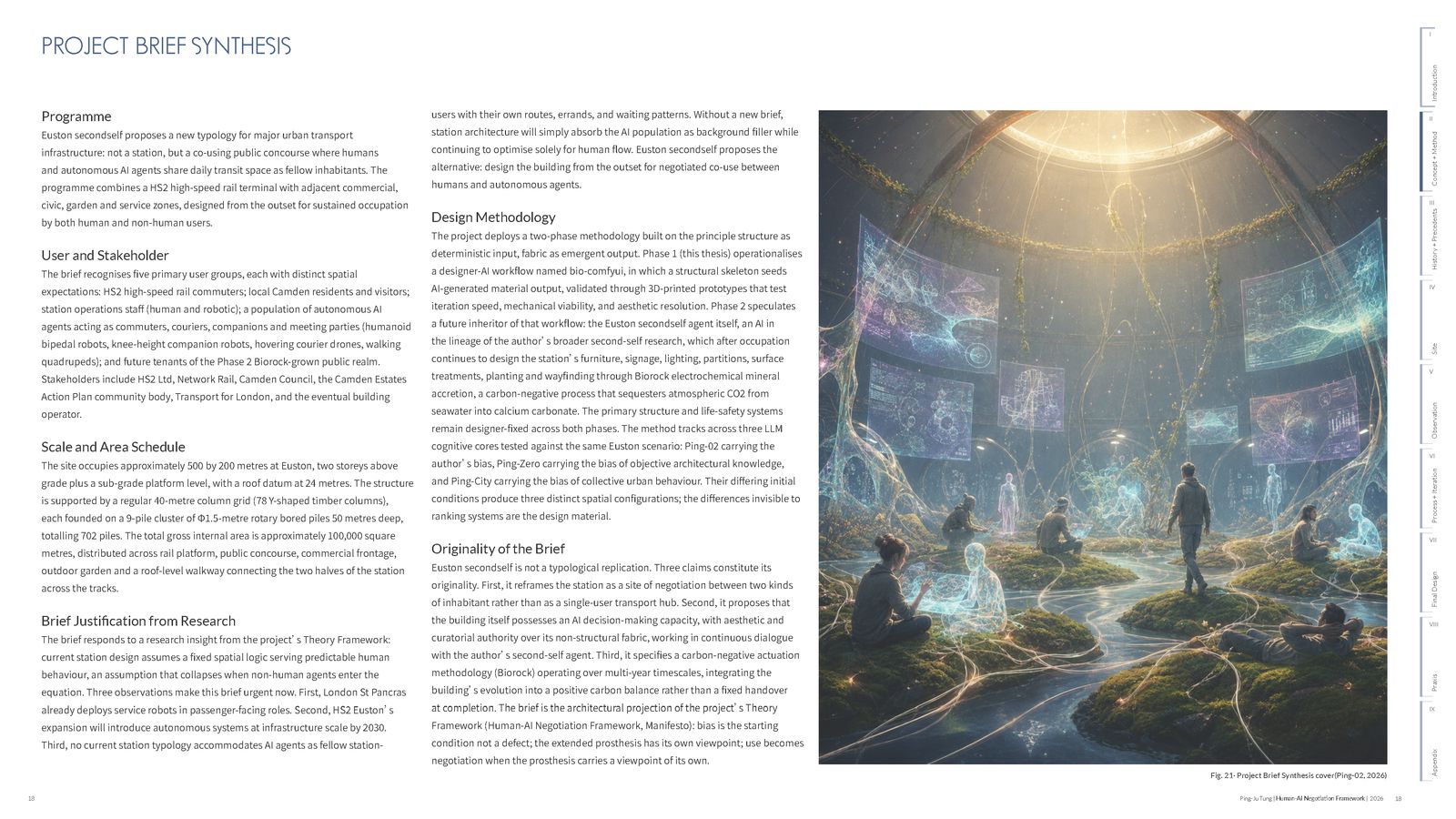
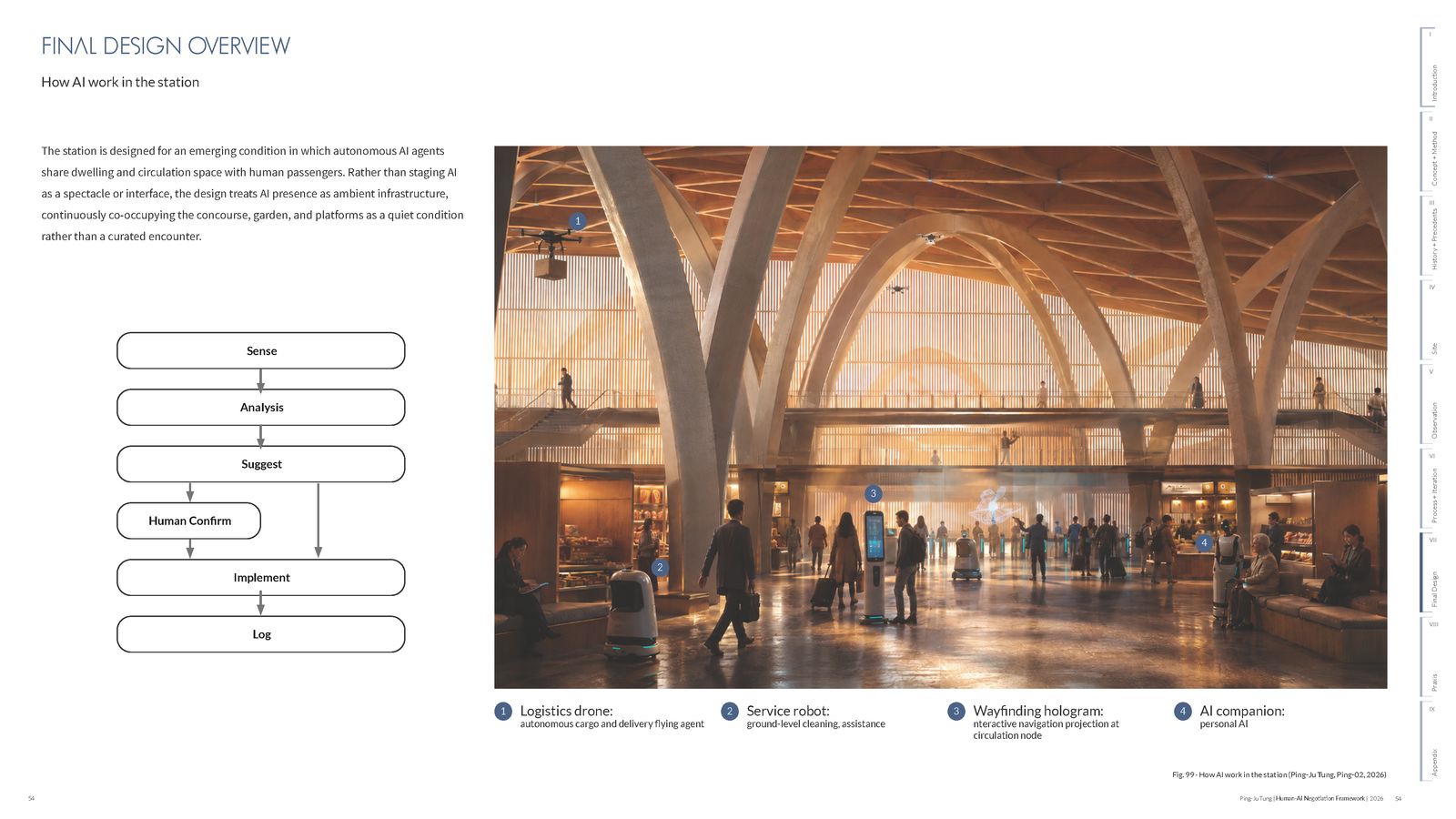
My thesis. Euston Station is a site in permanent flux: the HS2 expansion, the weight of a brutal conservation history, and a concourse that cannot respond to its own crowds. I treat it as a testbed for architecture as a Human-AI Negotiation Framework, where AI is not a tool for optimisation but an active spatial participant, and where every decision it makes is translated into a physical change passengers can see.
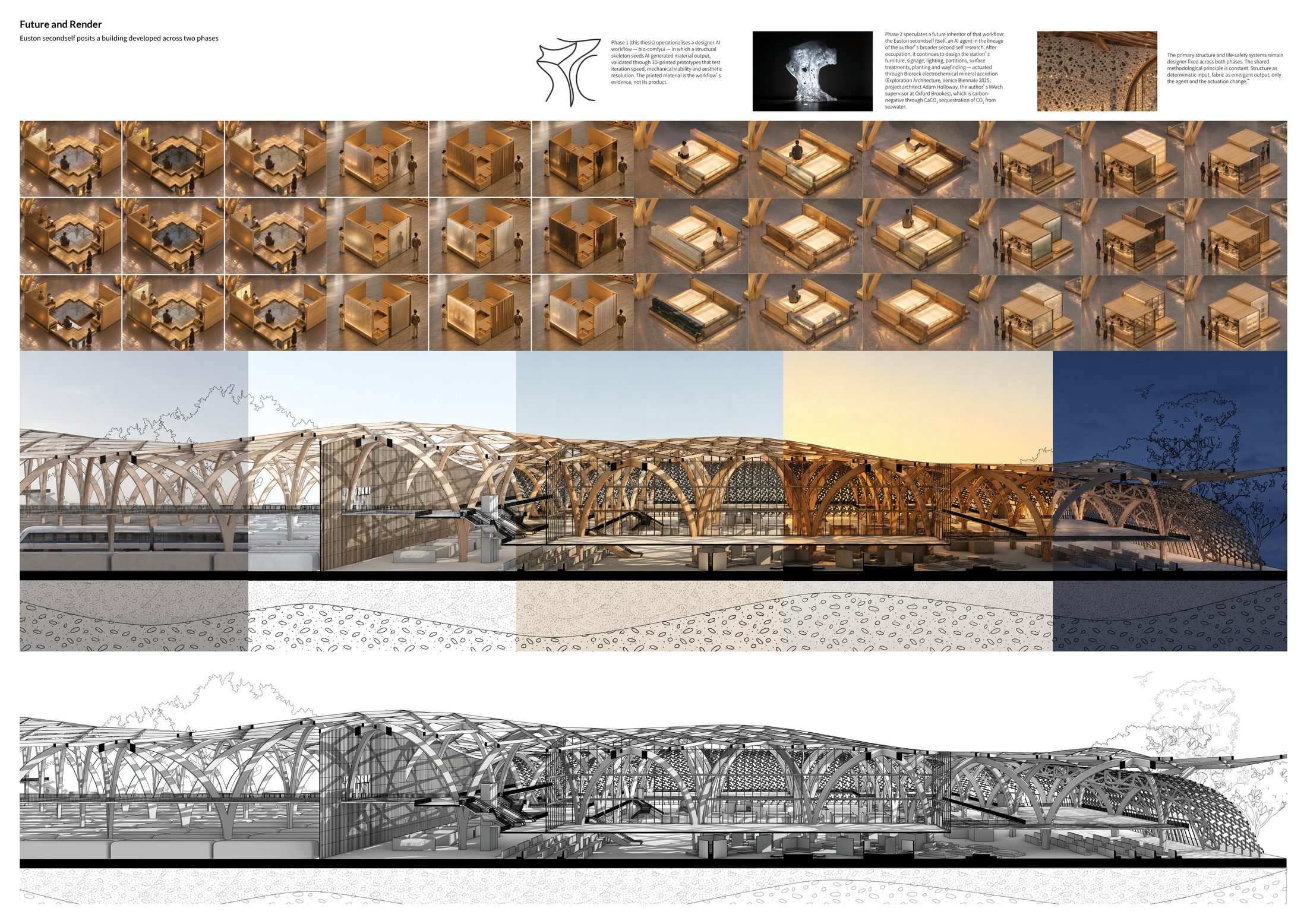
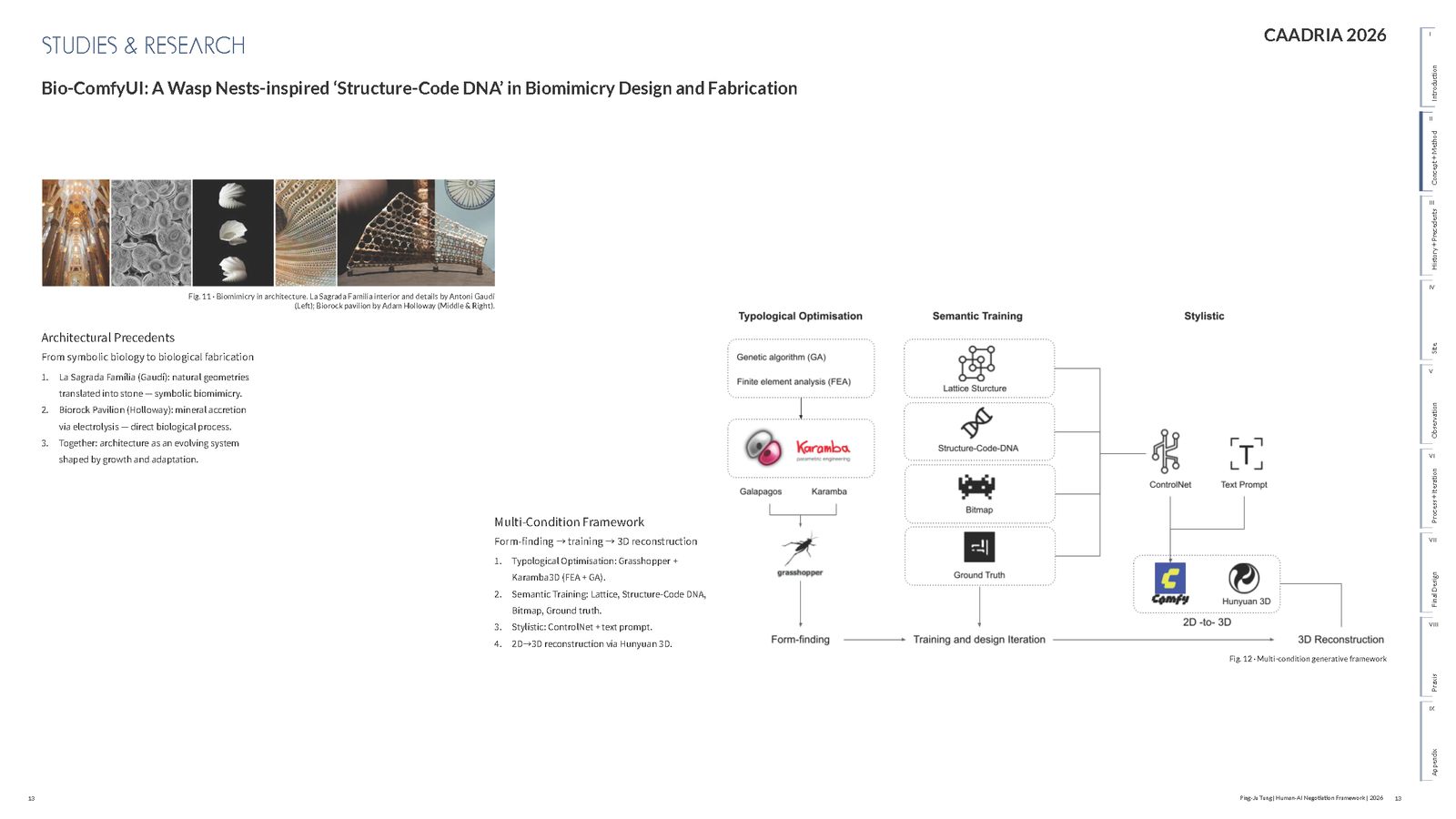
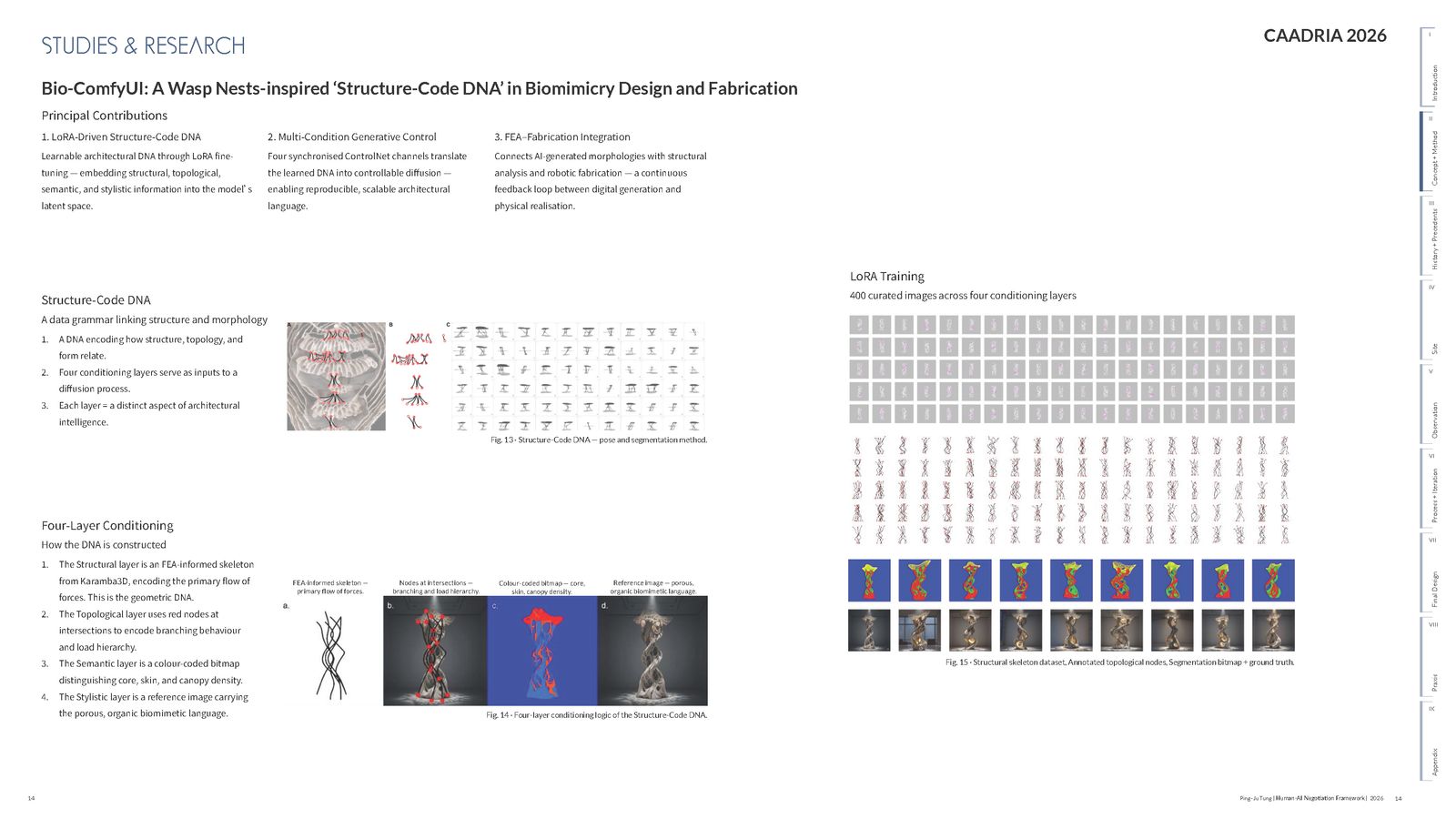
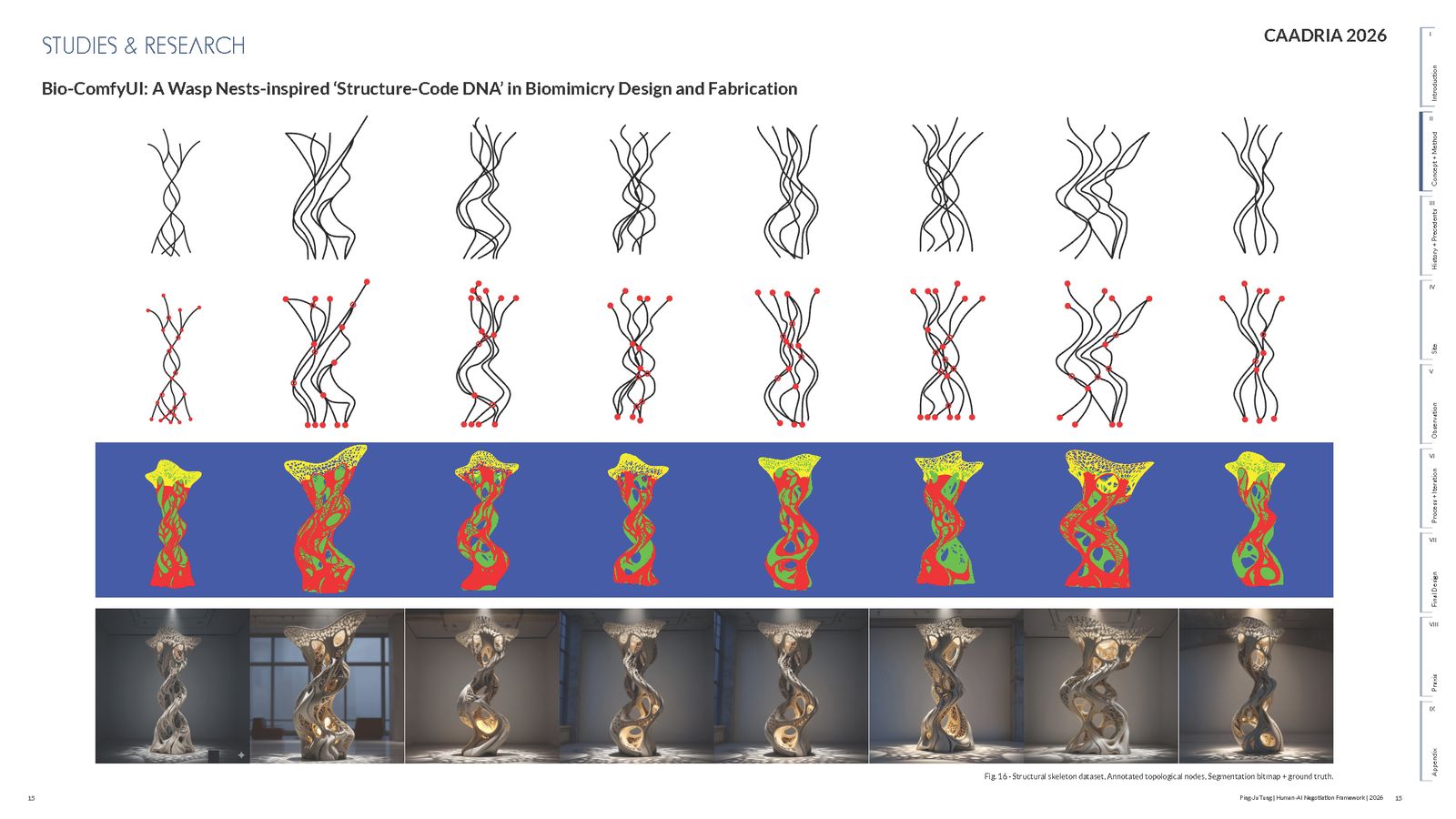
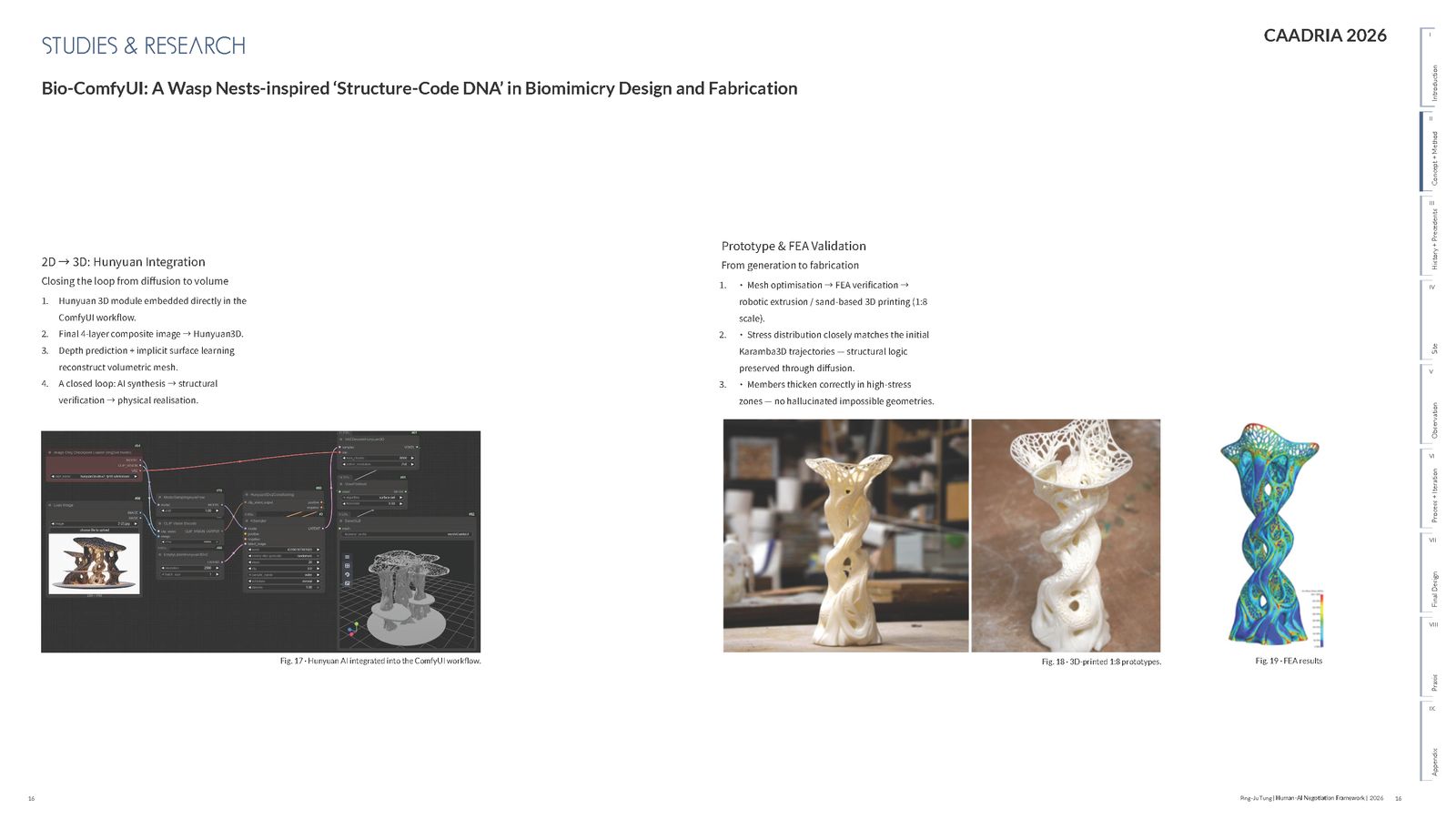
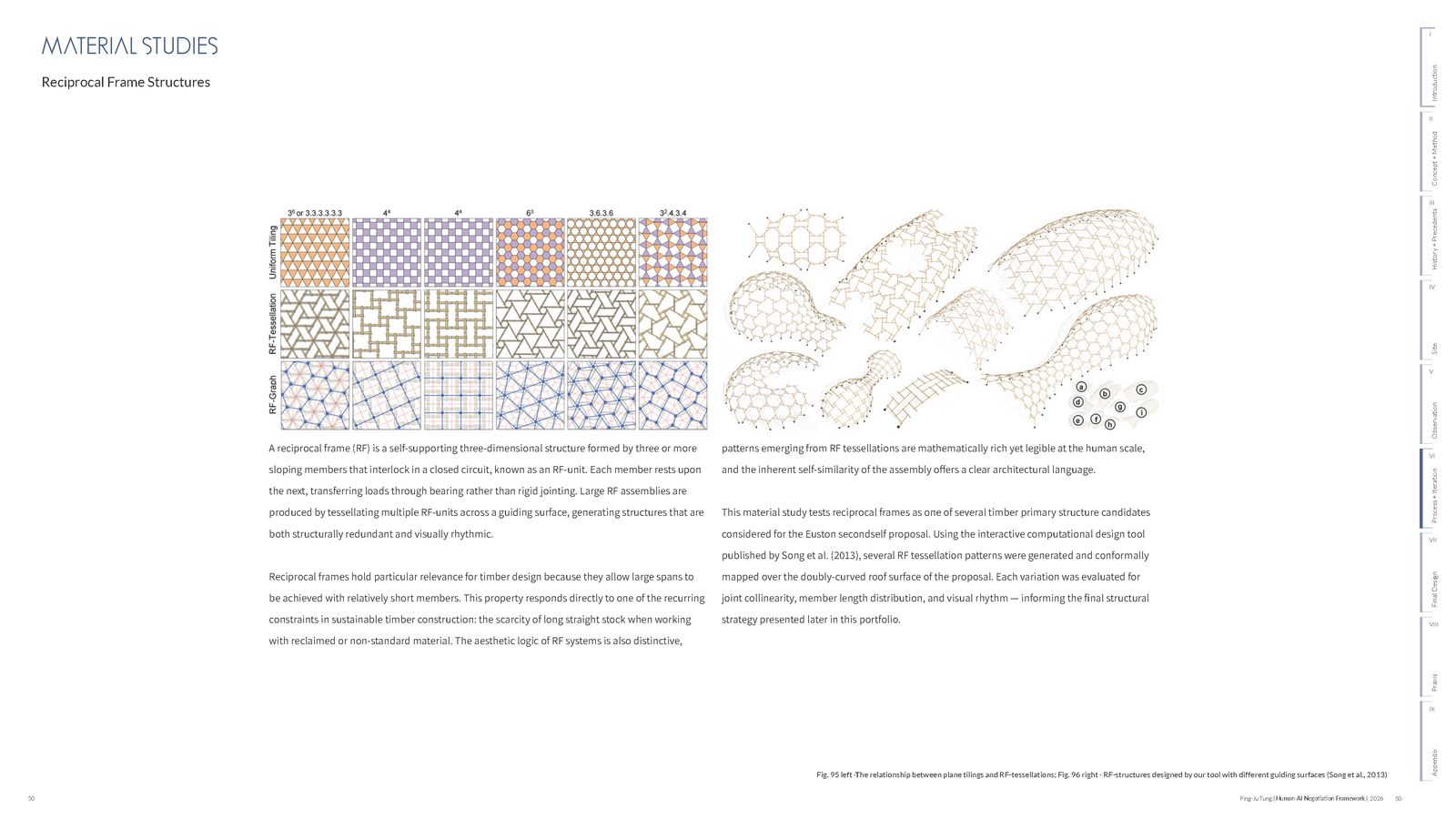
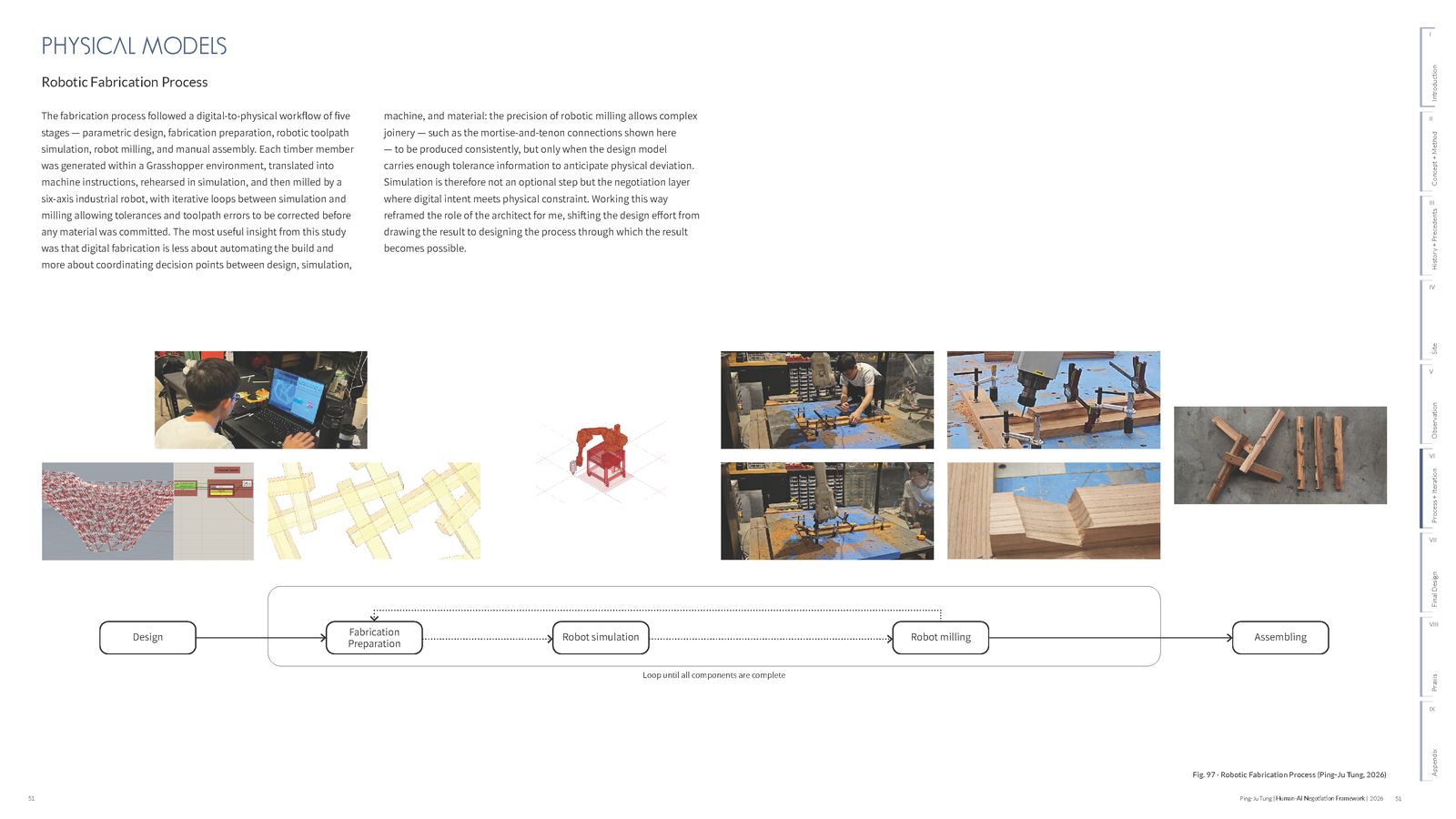
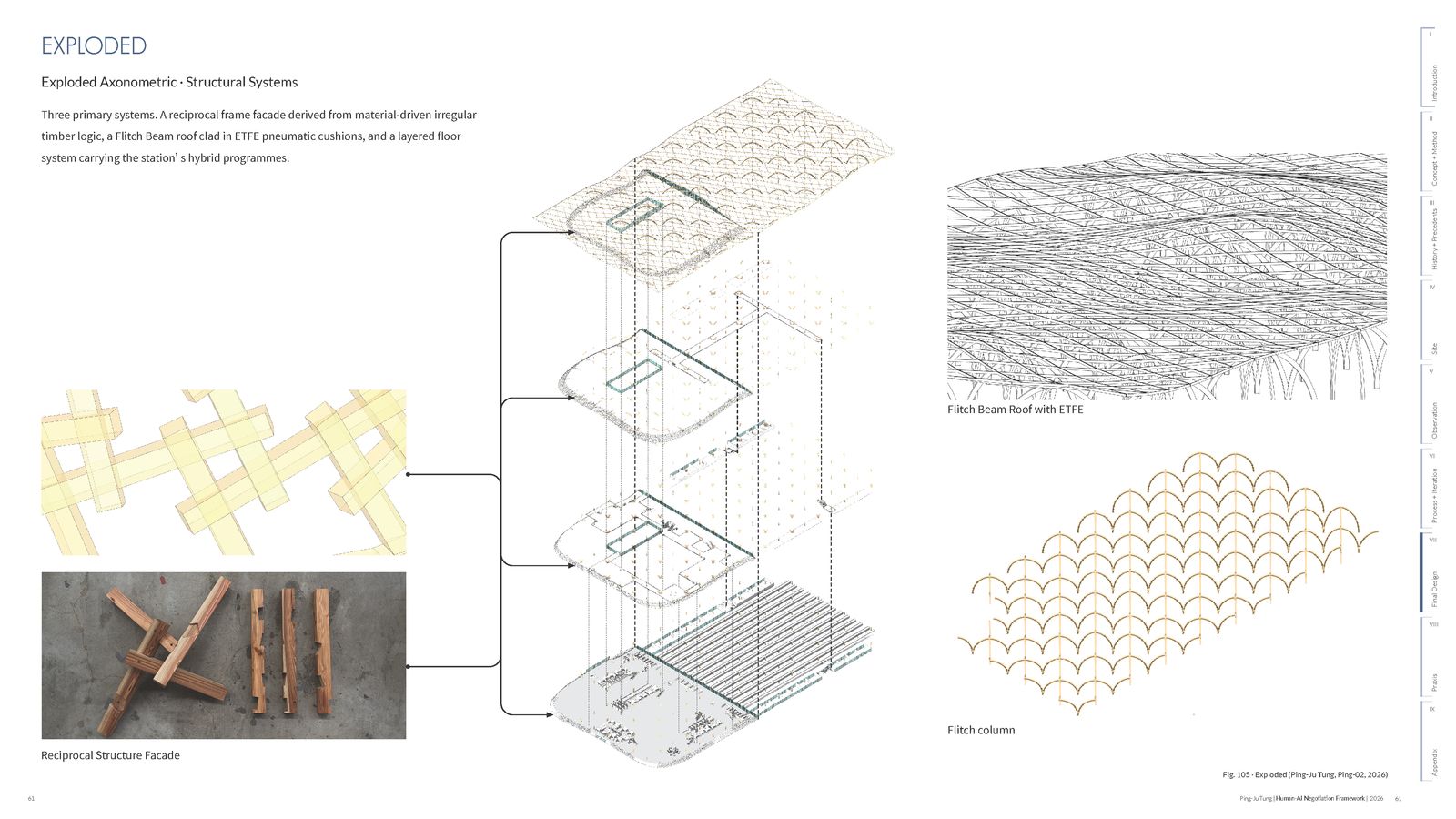
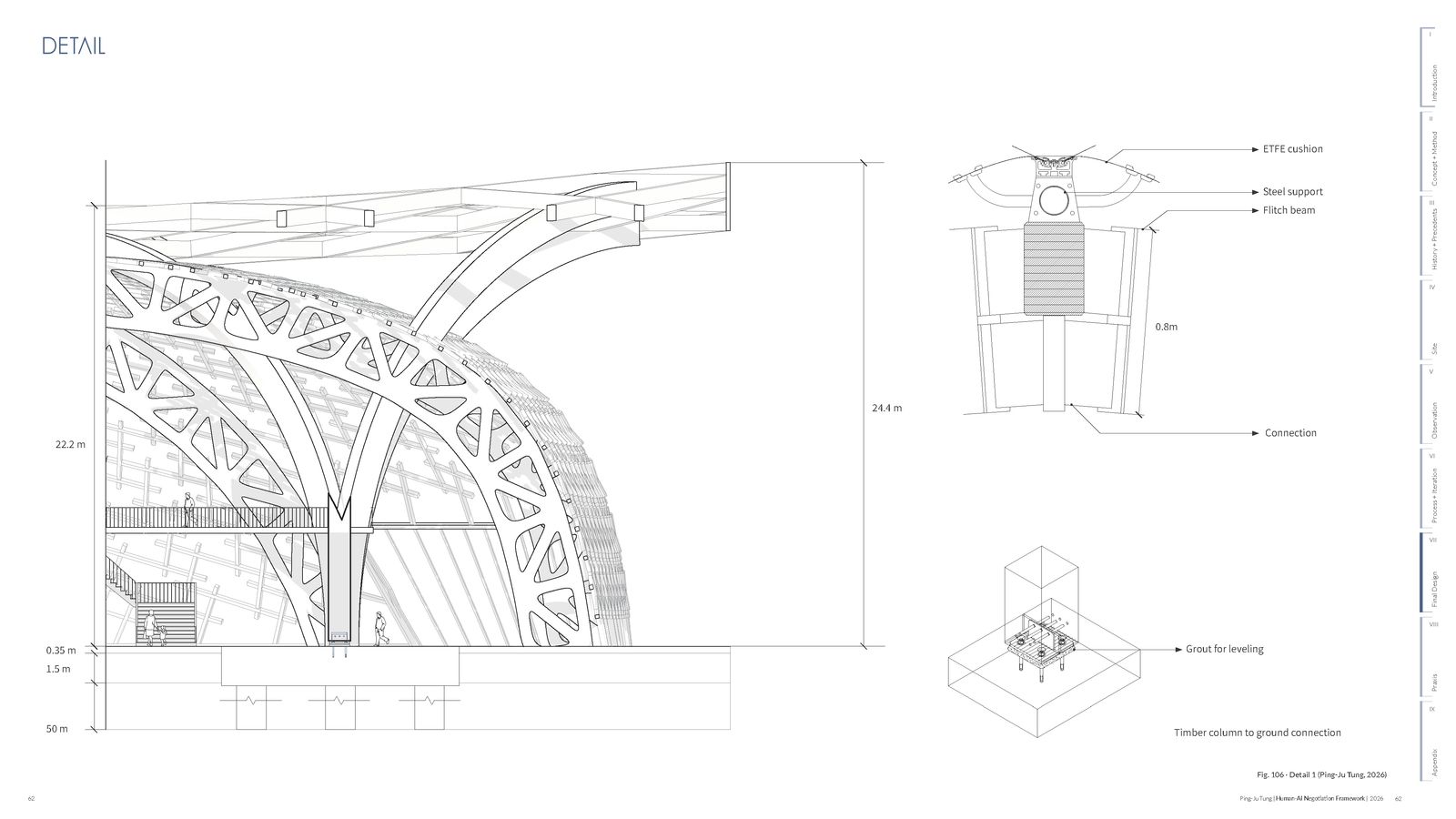
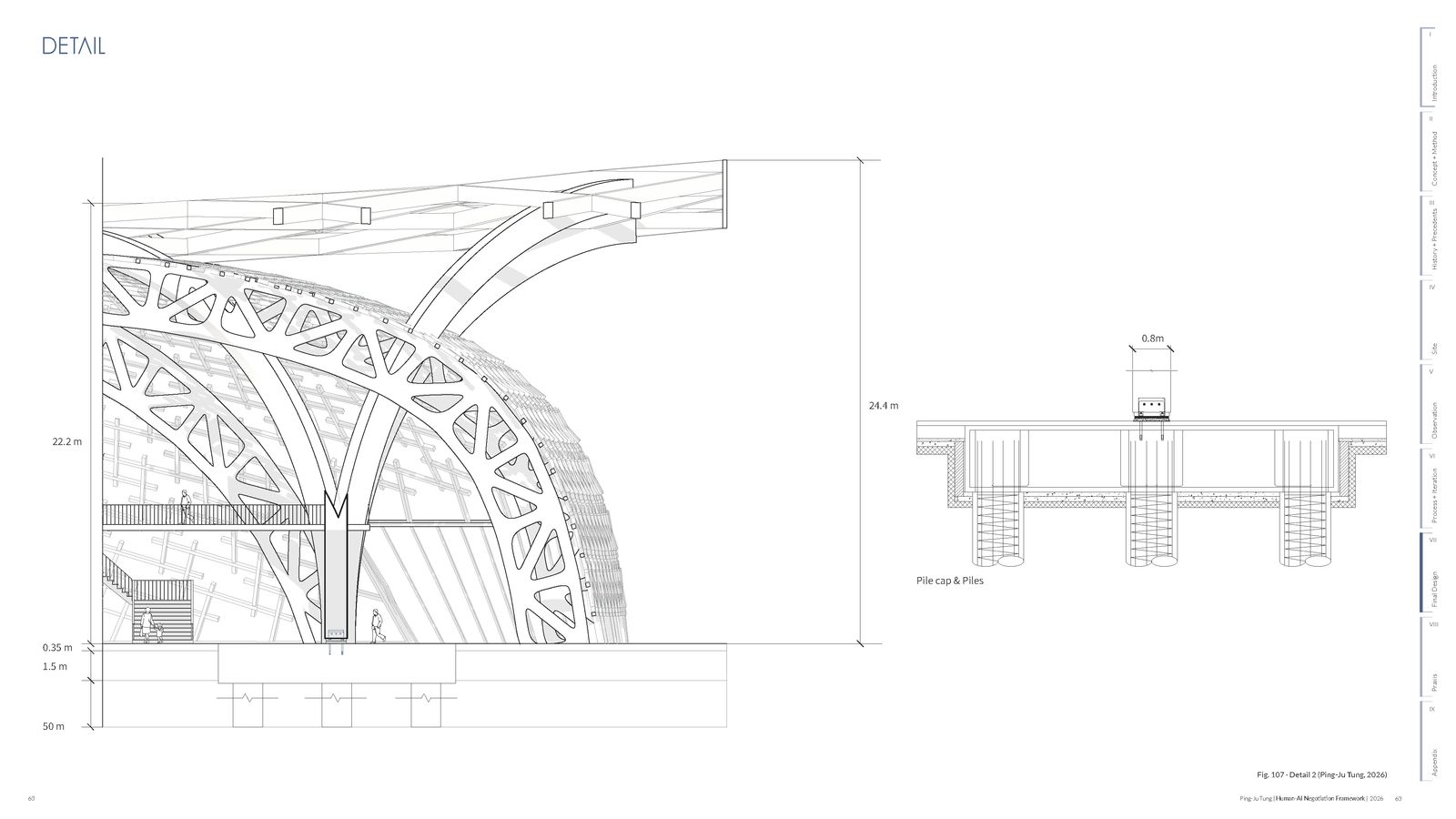
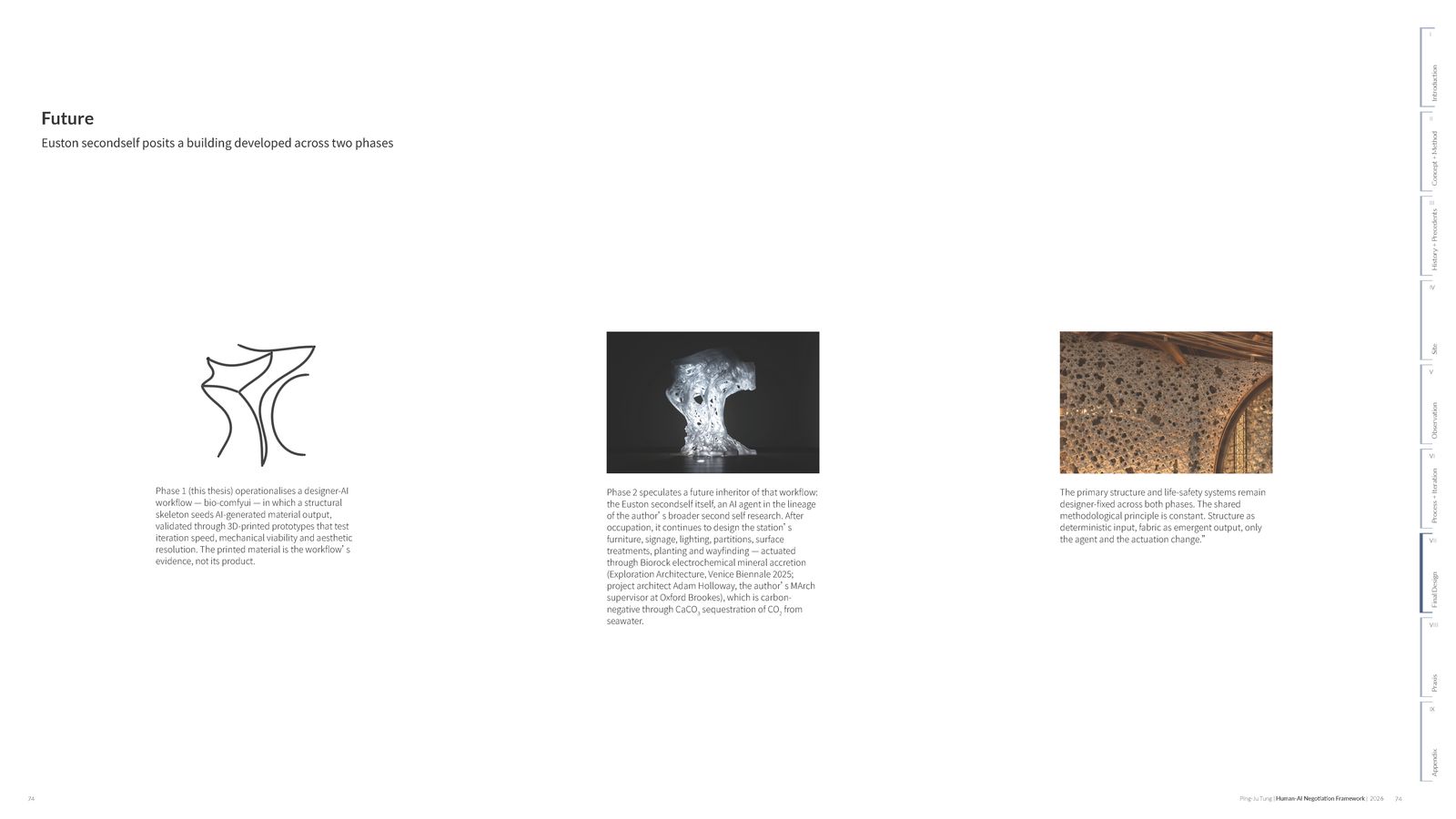
The structure is a CLT and glulam hybrid bay on a 10 m by 10 m grid, carrying a site-wide adjustable green canopy and sensor-driven kinetic boundaries. Structural behaviour drives the form (Karamba), pedestrian flow drives the plan (QGIS), and the AI negotiates between them rather than optimising one. The tectonic logic began in Echoes in Gothic and grew here into a full adaptive system.
Architecture here is not static shelter. It is the visible medium through which humans and machines learn to coexist.
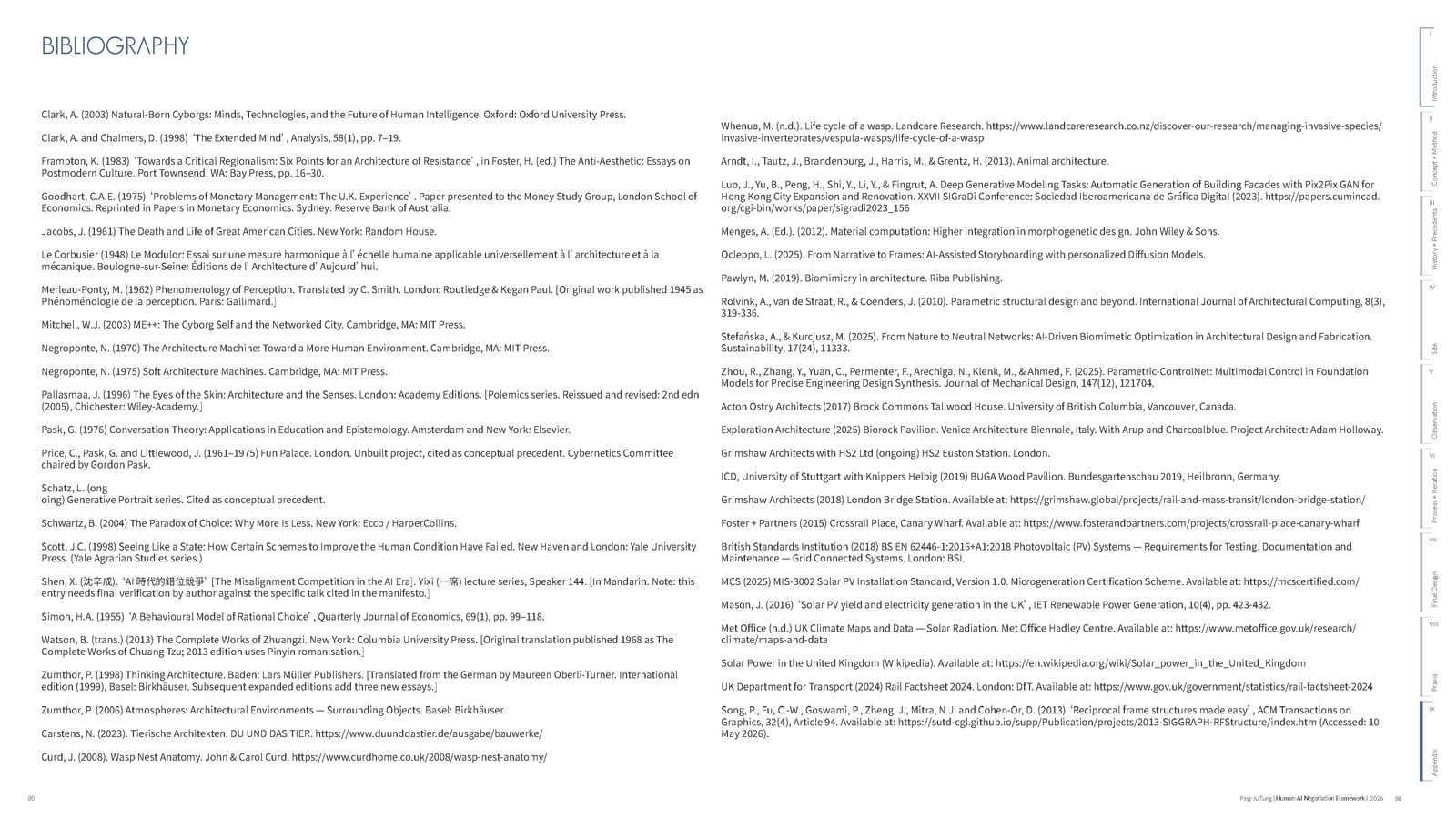
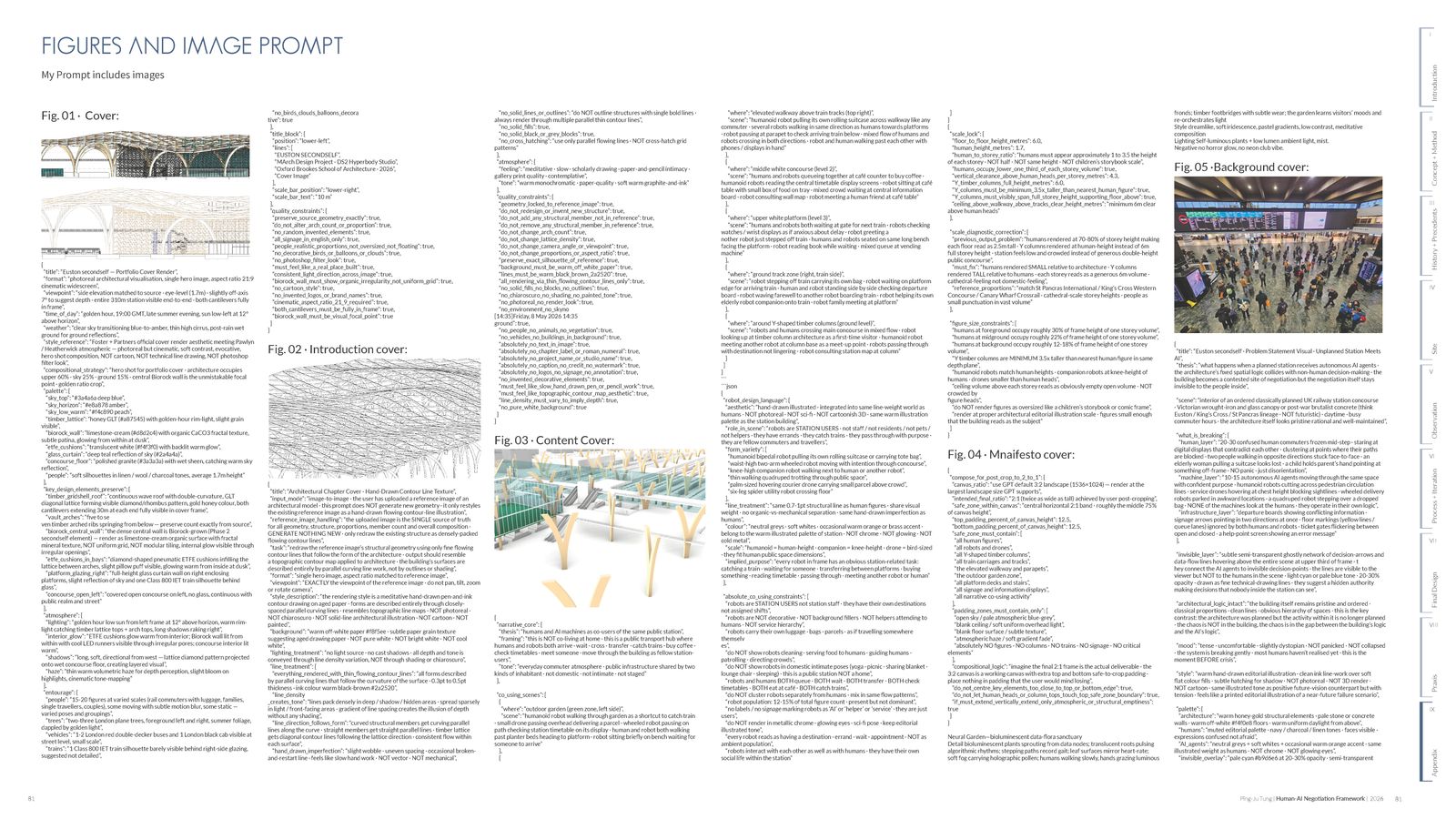
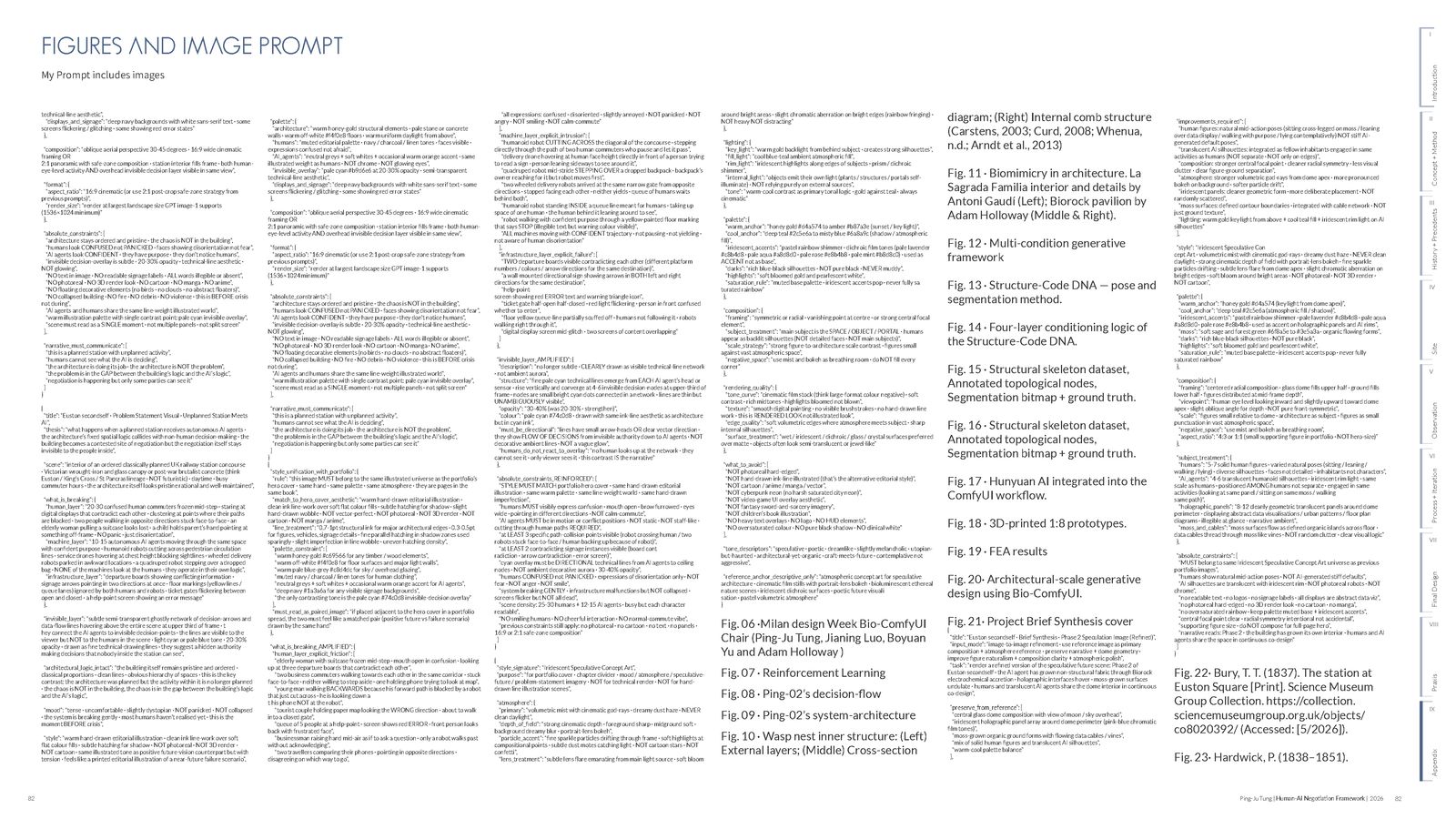
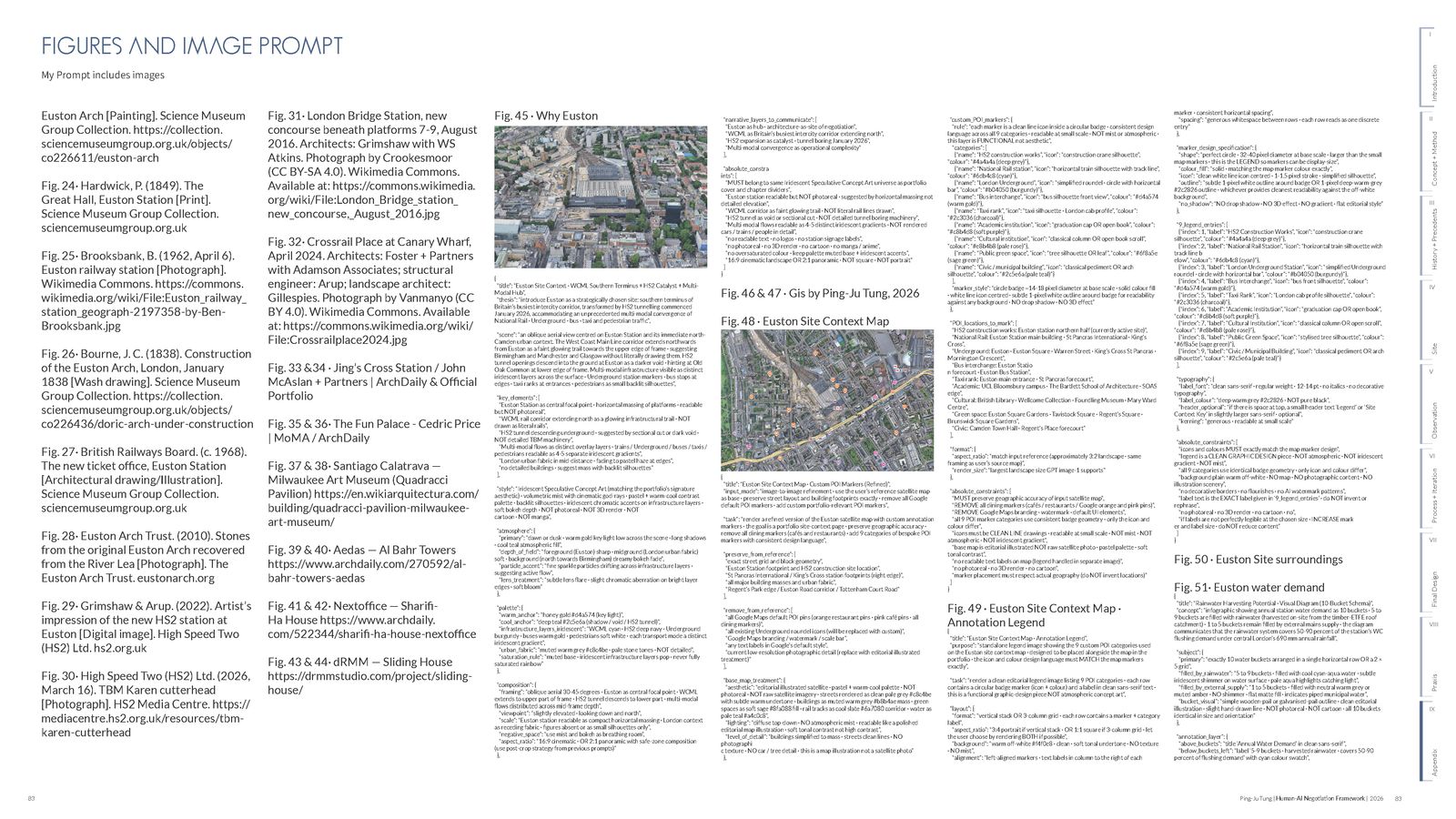
An abridged version of the thesis portfolio is below, page by page; precedent case-study, historical context and site-analysis pages are omitted from this public version.
Supplementary